Where To Stay On Waiheke Island: Oneroa, Onetangi Or Ostend
Choosing where to base yourself on Waiheke Island comes down to three villages with very different characters, and the ferry timetable decides more of it than most visitors expect.
Short answer
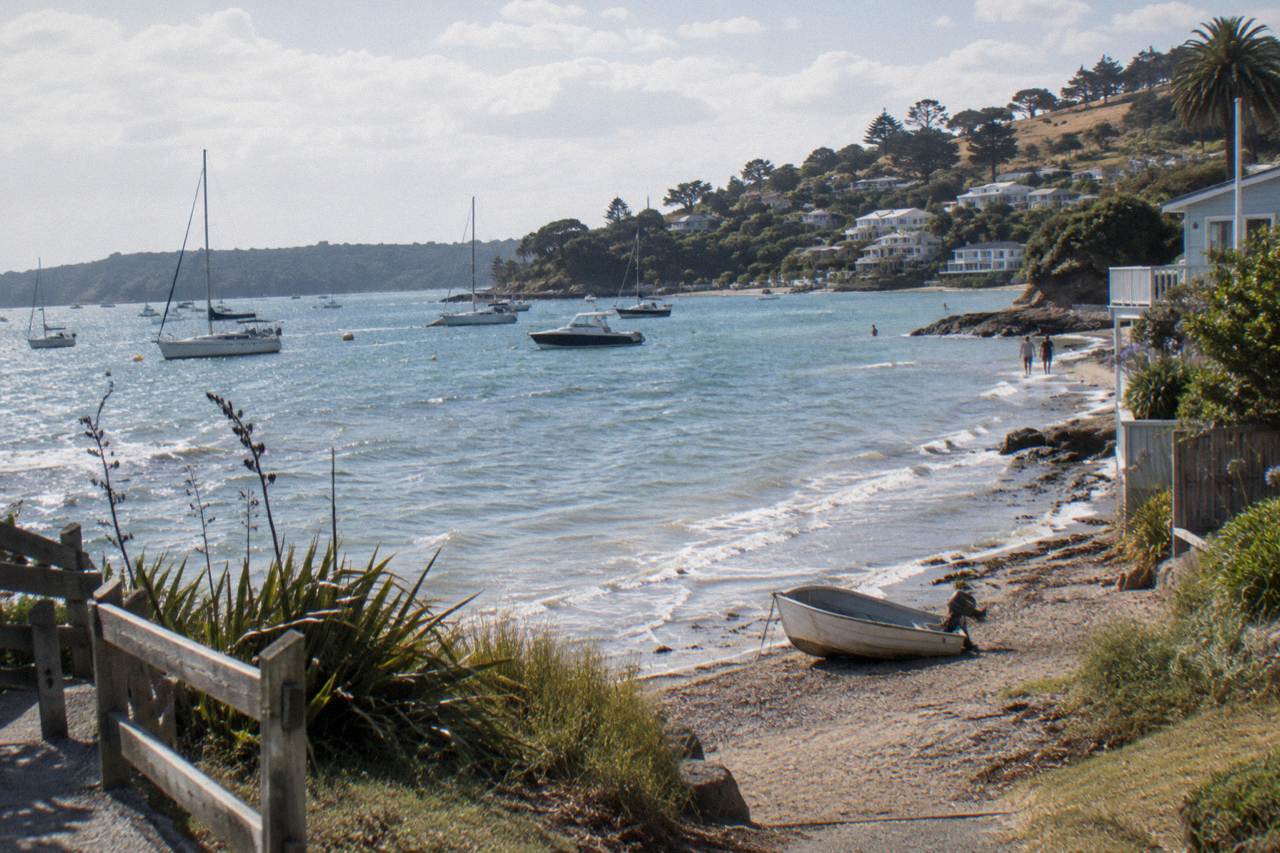
Oneroa sits closest to the Matiatia ferry terminal and the island's main village life. Onetangi offers the island's longest beach, around two kilometres of sand, and the vineyard belt above it. Ostend is the working village with the Saturday market. All three sit on the frequent bus corridor between Matiatia and Onetangi.
Most Waiheke Island visitors arrive on a morning ferry, tour three cellar doors and catch an evening sailing back to Auckland. A growing number stay the night, and once you do, a question appears that no day-tripper ever faces: which part of the island do you actually sleep on? The answer shapes everything else, including which wine tours you can reach easily and how much of the island you see without a car.
The island is home to around 9,310 residents as of the June 2025 estimate, with an estimated 3,400 more people owning holiday homes there. That second number explains the character of the three main accommodation areas: Oneroa, Onetangi and Ostend. This guide compares them by character, ferry access and tour-day logic, This guide compares the island's areas and what each offers, using the Waiheke Wine Tours planning material. It does not list individual hotel names, rates or ratings.; what follows is the area-level picture that holds true regardless of which property you book.
Should You Stay Overnight Or Day Trip From Auckland?
Staying overnight changes the rhythm of a Waiheke trip completely. A day visitor has roughly five or six island hours before the last ferry, which compresses a wine tour and lunch into a single timed block. An overnight visitor can tour one day, explore beaches and villages the next, and take an off-peak afternoon sailing home, when the walk-up adult return is NZ$65 and the off-peak return is NZ$48.50.
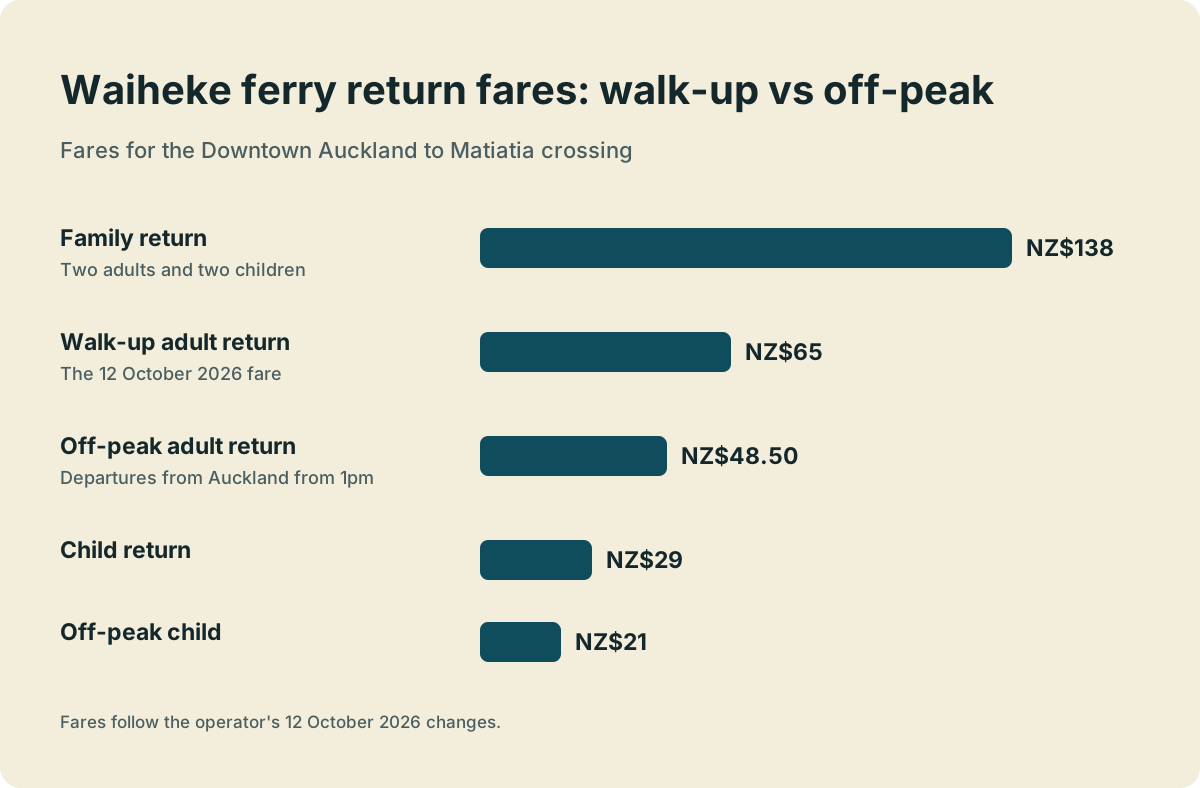
The ferry is the whole argument. Fullers360 runs the Waiheke Walk-up service between Downtown Auckland and Matiatia, a crossing of roughly 40 minutes, with some sailings via Devonport adding about 10 minutes. The current fares, following the operator's 12 October 2026 changes, are a walk-up adult return of NZ$65, an off-peak adult return of NZ$48.50 for departures from Auckland from 1pm, a child return of NZ$29 and a family return of NZ$138 for two adults and two children. Always treat these as "from" figures and check the operator's Waiheke destination page for the fare and timetable on your travel date.
A day trip is still entirely workable, and many people love it that way; our Waiheke Island day trip planning guide covers that pattern in detail. But the overnight version buys you the things a day trip cannot: a sunset over the Hauraki Gulf from your accommodation, a morning swim before the crowds land, and a wine tour that does not end with a race to the wharf.
It also changes your tour budget arithmetic. Day tours that start at Matiatia assume a ferry arrival, and almost none of them include the ferry ticket, so the fare is an add-on either way. Staying overnight, you simply walk to your tour's meeting point from your accommodation, and several operators, including the small-group tasting tour with lunch, list pickup from Waiheke accommodation or the ferry terminal among their inclusions.
| Decision factor | Day trip | Overnight stay |
|---|---|---|
| Island time available | Roughly 5 to 7 hours | Full days, no last-ferry pressure |
| Ferry cost exposure | One adult return, from NZ$48.50 off-peak | Same return fare, spread over more island hours |
| Wine tour timing | Must fit between ferries | Any day, including a relaxed mid-morning start |
| Evening on the island | None, last sailing decides | Sunset, dinner, quiet beaches |
| Accommodation cost | None | The main added expense |
Oneroa, Onetangi Or Ostend: Which Area Suits You?
Oneroa is the village closest to the ferry, with the island's main beach and its shopping and dining strip. Onetangi anchors the island's north coast with its long sweep of sand and the vineyard belt behind it, including Casita Miro. Ostend is the working village, home to the Saturday market and the hardware-and-groceries side of island life, usually the quieter and less touristy base.
Choosing between them is a character decision more than a logistics one, because all three sit on the Auckland Transport bus corridor that links Matiatia, Oneroa, Ostend and Onetangi. The core routes run frequently through the day, so no area is cut off. What differs is what is outside your door.
Oneroa is the default for first-time visitors. The beach is a wide stretch of white and golden sand, open around the clock, with free swimming and beach walks, and the village above it holds the island's main concentration of cafes and shops. The Waiheke Wine Centre in Oneroa is worth knowing about for a self-guided tasting evening, since Casita Miro was its featured Winery of the Month during the island's October wine celebration. From Oneroa, the walk down to Little Oneroa and along the coastal track is one of the island's easy free strolls.
Onetangi suits travellers whose priority is the beach itself. It is the island's longest at around two kilometres of golden sand, open 24 hours, with cafes nearby. The Onetangi Valley behind it is genuine wine country: SOHO Family Vineyards opened its new cellar door there in October 2025, an industrial-inspired, family-friendly space with a lawn and Mexican street food, and Te Motu, established in 1989 by the Dunleavy family, is Waiheke's oldest winery still run by its founding family. Staying in Onetangi puts several cellar doors and the beachfront 372 restaurant, a lunch stop on more than one island tour, within easy reach.
Ostend is the least glamorous and often the most practical choice. The Saturday Ostend Market, 7:30am to 1pm at the Ostend War Memorial Hall and Reserve, is the island's weekly institution, with local produce, crafts, food stalls and live music, and entry is free. The Rangihoua Wetland Path starts near the Waiheke Historical Village and Museum: an easy, roughly 2.6 kilometre flat circuit of about an hour through wetland and heritage areas, free to walk, with dogs on a leash. Ostend is also where the island's trades and services cluster, which makes it feel like a real place rather than a resort.
| Area | Character | Best for | Free highlight nearby |
|---|---|---|---|
| Oneroa | Main village, closest to ferry, cafes and shops | First-time visitors, walkable evenings | Oneroa Beach and the coastal track to Little Oneroa |
| Onetangi | Long beach, vineyard belt, spread out | Beach days and cellar-door hopping | Onetangi Beach, around 2 km of sand, open 24 hours |
| Ostend | Working village, market, locals' pace | Longer stays, self-catering, budget-conscious trips | Ostend Market Saturdays and the Rangihoua Wetland Path |
How Does The Ferry Timetable Shape Where You Stay?
Every accommodation decision on Waiheke ultimately routes through Matiatia, because that is where the foot ferry lands and where nearly every island tour starts. Staying near Oneroa puts you a short bus ride or a walk from the wharf; staying in Onetangi means a longer bus ride along the island's spine on tour morning. The ferry runs from 6am on weekdays and from 7am on weekends, with up to 50 sailings a day at busy times.
The summer 2026-27 schedule is unusually generous. Fullers360 announced more than 1,600 extra sailings compared with the previous summer, with 30-minute frequency at peak times from 19 October 2026, and every 20 minutes at the busiest times from 30 November 2026 to 28 February 2027. For an overnight visitor that frequency matters less than it does for a day-tripper, but it is the reason a late dinner in Oneroa or Onetangi does not strand you on your departure day.
The practical rule: if your tour starts at Matiatia, and nearly all of them do, book accommodation with the morning transfer in mind. The Scenic Wine and Lunch Experience, a shared half-day tour from NZ$275 per person rated 4.8 from 73 reviews, starts at Matiatia Wharf, runs four hours and includes a platter lunch and the wine tasting fees at the vineyards visited; from Oneroa you reach it in minutes, from Onetangi allow a bus ride along the corridor. Its listing shows free cancellation up to 24 hours before start, useful if your plans shift while you are already on the island.
Read the fuller fare and sailing detail in our Waiheke ferry timetable and fares guide, which carries the current walk-up, off-peak and child figures and explains the off-peak definition, departures from Auckland from 1pm.
| Ferry fact | Figure | Notes |
|---|---|---|
| Walk-up adult return | NZ$65 | The 12 October 2026 fare |
| Off-peak adult return | NZ$48.50 | Departures from Auckland from 1pm |
| Child return | NZ$29 | Off-peak child NZ$21 |
| Family return | NZ$138 | Two adults and two children |
| Crossing time | About 40 minutes | Some services via Devonport add about 10 minutes |
| First departures | 6am weekdays, 7am weekends | From Downtown Auckland |
What Can You Do On Your Free Day Without A Car?
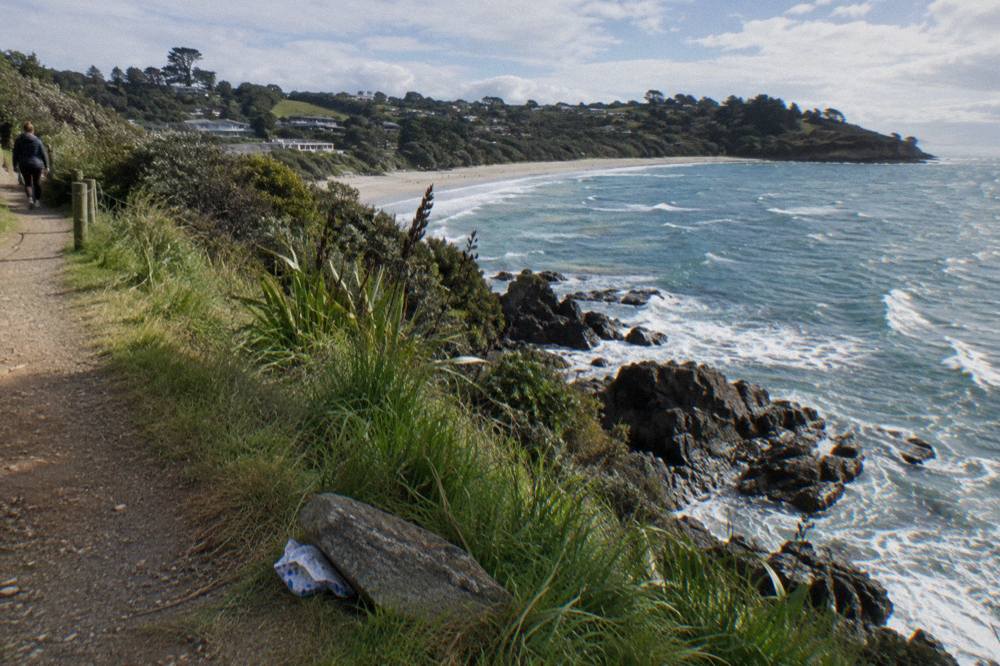
You do not need a car to fill a second day on Waiheke. The free options are extensive: Onetangi and Oneroa beaches, the Matiatia Owhanake coastal loop of roughly 7.7 to 9 kilometres starting at the ferry terminal, the Church Bay circuit, the more than 100 kilometres of the Te Ara Hura track network, Hekerua Bay and the Rangihoua wetland path. Buses link the main villages on the frequent core corridor.
The pattern that works well for overnight visitors is a walking morning and a tour afternoon, or the reverse. The Matiatia Owhanake Coastal Loop, a moderate 2.5 to 3 hour walk with coastal views, bush and bays, starts directly at the ferry terminal, so it pairs naturally with an Oneroa or Ostend base. Note that some coastal sections depend on the tide, so check before setting out. Our free things to do on Waiheke Island guide lists all of these with access notes.
For a free day with wine in it, e-bikes are the flexible middle ground. The Premium eRide eBike Experience from eRide Waiheke, from NZ$119 per person, hands you a fully charged high-performance e-bike, route maps via an app, a pre-ride safety briefing and suggested stops tailored to you; tasting fees, food and the ferry are extra, and the listing shows no rating. The island is genuinely hilly, with steep climbs between beaches and villages, which is exactly why e-bikes rather than standard bikes dominate here; our Waiheke bike and e-bike wine tours guide covers the terrain honestly.
If two wheels do not appeal, the guided bush hike with wine tasting, run by Terra & Tide at 4.9 from 53 reviews, from NZ$477 per person, combines a guide trained in local flora, fauna and conservation with two wine tastings, at Cable Bay Vineyards and Mudbrick, and a picnic lunch. One guest review on the listing calls it "a spectacular walk around the island with lots of breathtaking views, a delicious lunch", and credits the guide with identifying "many plants and birds". It is a reminder that Waiheke rewards being on foot as much as being in a van.
Which Wine Tours Work Best From An Overnight Base?
An overnight base widens your tour options toward the longer and slower formats. Half-day tours, roughly four to five and a half hours, suit a two-night stay where you want an afternoon free. Full-day private tours, such as the full-day private island wine tour from NZ$800 per person, make most sense when you are not racing a ferry home. The shared tastings-only half-day tour from NZ$195 per person is the budget anchor.
The tours split cleanly by format. Small-group tours cap the guest count and usually include lunch: the Small-Group Tasting, Lunch Included tour from The Wine Tasting Company, 4.9 from 82 reviews at from NZ$299 per person, includes wine tastings at three vineyards, some paired with food, a platter-style lunch with a glass of wine or a main, and pickup from Waiheke accommodation or the ferry terminal, though not the ferry ticket. A guest review names the guide, Margo, and describes her as a fantastic tour guide who helped everyone in the group have a great time.
Shared tours cost less and mix a bigger group. The Waiheke Island Wineries Day Tour with Tastings and Lunch from Ananda Tours, 4.9 from 198 reviews at from NZ$310 per person, includes tastings at three vineyards, a scenic tour with lookouts and beaches, and the cost of a one-course lunch plus a local beverage. One review describes it as "a great way to enjoy some of Waihekes vineyards in a casual manner, plus a yummy lunch to end trip", noting that the small group meant guests "make new friends".
Private formats matter more once you are staying over, because they let you set the day around your accommodation rather than a ferry. The Private and Customizable Wineries Tour from Ananda, 5 from 19 reviews at from NZ$790 per person, includes pickup and drop-off from Waiheke accommodation, premium tastings at up to three vineyards and lunch, with the ferry excluded. Note the basis: private tours priced per person here, while the Sommelier Tour is priced per group at NZ$1,600, so never compare them without saying which.
| Tour | Format | From | Lunch | Rating and reviews |
|---|---|---|---|---|
| Scenic Wine and Lunch, 4 hours | Shared | NZ$275 pp | Included | 4.8 from 73 |
| Small-Group Tasting, Lunch Included | Small group | NZ$299 pp | Included | 4.9 from 82 |
| Shared Day Tour, Tastings and Lunch | Shared | NZ$310 pp | Included | 4.9 from 198 |
| Private Customizable Wineries Tour | Private | NZ$790 pp | Included | 5 from 19 |
| Full Day Private, Lunch Included | Private | NZ$800 pp | Included | 5 from 9 |
For a deeper comparison of the two dominant formats, see small group versus private Waiheke wine tours.
When Should You Book Your Stay And Your Tour?
Book accommodation first, then the tour, then the ferry, in that order. The Auckland tourism guide describes summer, December to March, as the peak season with the highest crowds, advising that visitors book ferries, winery visits, tours and accommodation well ahead. Autumn, April to May, is described as a milder "sweet spot" with thinner crowds, and winter, June to August, as quiet, with some cellar doors shifting to weekend-only or reduced hours.
That seasonal rhythm is the single most useful planning input. In winter, an Onetangi base can feel remote if the cellar doors around it are open only late in the week, while Oneroa's village life keeps going. The long-term climate normals for the Awaroa Valley station, the 1991 to 2020 series, put January's mean daily maximum at 24.3 C with 66.5 mm of rain, against July's 15.2 C maximum and 153.6 mm: summer is warmer and drier, but this is not a desert island, and a rain jacket earns its place in any season.
One dated fact worth folding into your timing: the Waiheke Island of Wine celebration ran from 1 to 31 October 2026, a month of winemaker dinners, masterclasses and cellar-door exclusives organized by the Waiheke Winegrowers Association, whose region counts 216 hectares planted among 30 growers. Events of that kind change year to year, so check the association's own pages for whatever is running when you visit rather than assuming a repeat.
Red wine dominates the island's output, 57 percent of production, with Merlot at 19 percent and Syrah at 18 percent, and Chardonnay leading the whites at 16 percent. That mix is why the same three or four cellar doors keep appearing across every tour itinerary: the island's plantings are concentrated, and its reputation rests on Bordeaux-style blends and Syrah. Our guide to what Waiheke wine is famous for unpacks the varieties if you want to taste with context.
| Season | Island character (Auckland tourism guide wording) | Booking implication |
|---|---|---|
| Summer, Dec to Mar | Peak, warm, highest crowds | Book stay, tour and ferry well ahead |
| Autumn, Apr to May | Milder days, thinner crowds, harvest timing | A "sweet spot"; more spontaneity |
| Winter, Jun to Aug | Quiet, some cellar doors weekend-only or reduced | Better availability; check hours before planning tastings |
How Do You Match The Area To The Rest Of Your Itinerary?
Match your base to what you want each evening, not to your tour. Tours collect from Matiatia or, on some listings, from Waiheke accommodation, so the tour day largely solves itself. The choice that lingers is the non-tour day: Oneroa for walkable dinners and the coastal track, Onetangi for the beach and cellar doors on your doorstep, Ostend for the market and a slower, local rhythm.
A two-night pattern works well: arrive mid-afternoon, take the off-peak sailing if the timing suits, settle in and eat in your village; tour on day two; and spend the final morning on a free walk or the beach before a later ferry. With the ferry crossing at about 40 minutes, even a late-morning departure gets you to Downtown Auckland by lunch.
If a third day appears, the hop-on hop-off option fills it cheaply. The Fullers360 Western Explorer runs daily from 10am at Matiatia with 16 stops on a loop of roughly 80 minutes, and the Ferry and Hop-On Hop-Off Explorer Bus Tickets tour, rated 4.6 across 3,914 reviews and from NZ$104 per person, is one of the few options that includes the return ferry ticket, plus all-day bus access and an on-board host. The hop-on hop-off bus and wine tours guide compares it properly against guided tours.
The final word on area choice: none of the three is a mistake. The bus corridor links them all, the ferry lands at Matiatia whatever you choose, and the island is small enough that a "wrong" base costs you minutes, not days. Pick the character that fits your evening, book the tour that fits your daylight, and let the ferry look after itself.
Common Questions About Where To Stay On Waiheke Island
Should I stay on Waiheke Island or just day trip from Auckland?
A day trip gives you roughly five to six island hours, enough for one tour. An overnight stay removes the last-ferry pressure, lets you take the cheaper off-peak afternoon sailing home, from NZ$48.50 adult return, and gives you a free day for beaches and walks.
What is the best area to stay in on Waiheke Island?
Oneroa for walkable village life and ferry proximity, Onetangi for the long beach and vineyard belt, Ostend for the Saturday market and a quieter local pace. There is no wrong answer; all three sit on the frequent bus corridor between Matiatia and Onetangi.
Do I need a car on Waiheke Island?
No. Buses link Matiatia, Oneroa, Ostend and Onetangi frequently, tours provide the transport between cellar doors, and the free walks and beaches are reachable on foot or by bus. The island is hilly, so e-bikes, from NZ$119 per person for the premium eRide experience, are the popular self-guided option.
How many days do you need on Waiheke Island?
Two nights is the sweet spot for most visitors: a tour day, a free day for beaches, walks and the Ostend Market if your stay includes a Saturday, and no ferry countdown. One extra night opens the full-day private tours without time pressure.
Is the ferry included in Waiheke wine tours?
Almost never. Only a handful of listings include the ferry ticket, among them the hop-on hop-off Explorer bus package. Most island tours start at Matiatia Wharf and expect you to arrive on the island first, so factor the fare, from NZ$48.50 off-peak adult return, into your budget.
When should I book accommodation on Waiheke Island?
The Auckland tourism guide advises booking ferries, tours and accommodation well ahead for summer, December to March, the peak with the highest crowds. Autumn is described as a milder sweet spot with thinner crowds, and winter is quiet, with some cellar doors on reduced or weekend-only hours.