Cycling Waiheke Island's Vineyards: E‑Bike Hire Vs Guided Tours
Waiheke is small, beautiful and consistently hilly, which is why the cycling decision here is really an e-bike decision. This guide compares renting an e-bike with booking a guided wine tour, using the island's own terrain data and the current tour listings.
Short answer
Waiheke Island cycling works best on an e-bike: the island is hilly, with steep climbs between Matiatia, Oneroa, Palm Beach and Onetangi, and the popular 5 Bays Ride runs 24 to 32 km. The Premium eRide eBike Experience lists from NZ$119 per person, while guided shared wine tours start from NZ$185 per person.
Cycling Waiheke Island sounds like the obvious budget move: the ferry lands at Matiatia, the vineyards sit scattered across a compact island, and the sea is never far from view. The catch is the topography. Local cycling maps describe the island bluntly as hilly, with steep climbs connecting the beaches and villages, and that single fact reshapes the whole decision. A pedal bike day can turn into a hot grind up a steep grade by mid-afternoon, while an e-bike flattens the same road into scenery.
This guide compares the two realistic options. One is hiring an e-bike, with the Premium eRide eBike Experience from eRide Waiheke among the tours on this page, from NZ$119 per person. The other is a guided wine tour, where someone else handles the hills entirely, with shared tours on the island starting from NZ$190 per person. We compared the listings, the terrain data and the transport facts so you can pick the format that matches your legs and your tasting plans.
What Makes Cycling Waiheke Island Different From Riding At Home?
Waiheke is a hilly island of about 9,310 residents with around 30 growers farming 216 hectares of vines, and its roads connect bays and ridgelines rather than forming a flat grid. Cycling it means repeated short, steep climbs between villages, which is why local riding guides recommend e-bikes for almost everyone. The reward is a compact network of sealed roads where a full day covers beaches, vineyards and lookouts.
The Waiheke Wine Growers Association describes the island as a dry, sunny microclimate specialising in Bordeaux-style blends and Syrah, with 216 hectares planted among 30 growers. Those vineyards are not clustered in one flat valley. They sit on north-facing slopes, because that is where the grapes ripen best, and north-facing slopes on a gulf island mean climbs. The wine region's geography and the cycling challenge are the same geography.
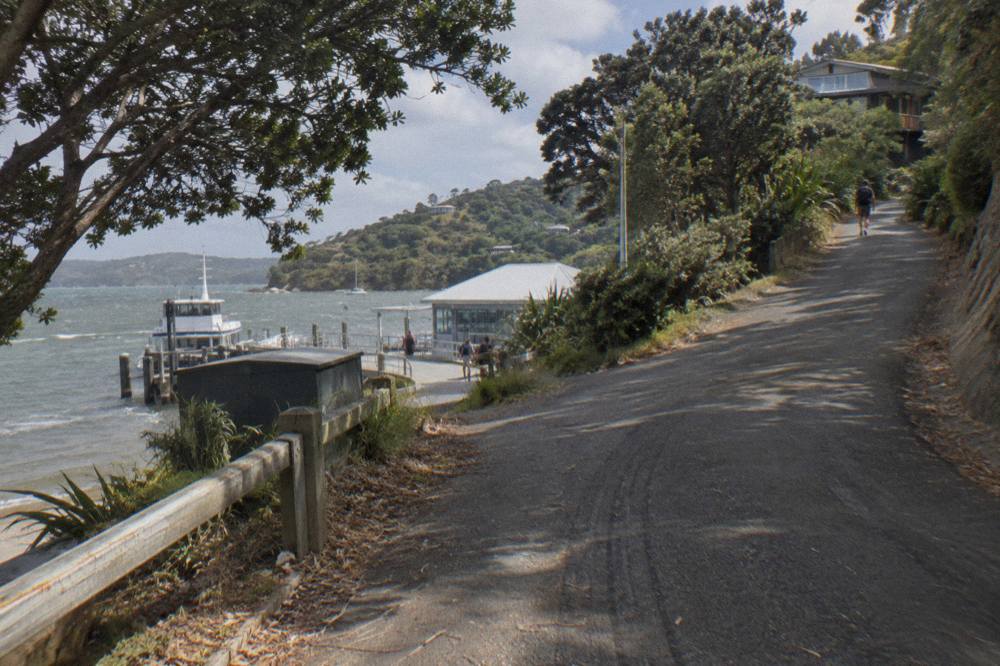
The island's own cycling resources are honest about this. The Cycle Action Waiheke bike map, the reference most local riders use, describes routes such as the Matiatia, Oneroa, Palm Beach and Onetangi loops as moderate but hilly, and it is the source that recommends e-bikes for the island. That recommendation is not marketing caution. The climb out of Matiatia alone, right at the start of any ride from the ferry, sets the tone for the day.
None of this makes cycling a bad idea. It makes cycling a planning decision. Riders who accept the hills get an island that rewards them at the top of every climb, and riders who would rather not can hand the hills to a driver, which is exactly the choice between the eRide e-bike day and the guided tours compared later in this guide.
How Hard Is The Riding Really?
The island's flagship route, the 5 Bays Ride, runs 24 to 32 km on sealed roads and takes roughly 4 to 7 hours at a touring pace, and local maps grade it moderate but hilly. Longer routes toward Man O' War country add gravel and serious climbing. For most visitors, that difficulty profile points straight at an e-bike rather than a pedal bike.
The 5 Bays Ride is the route most e-bike riders end up following, and the numbers come from the local cycling resources rather than any tour operator. It links the bays of the northern coast, staying on sealed roads the whole way, and the wide time range reflects how many vineyard stops you make. A rider rolling straight through finishes near the bottom of the range. A rider stopping at three cellar doors is closer to the top.
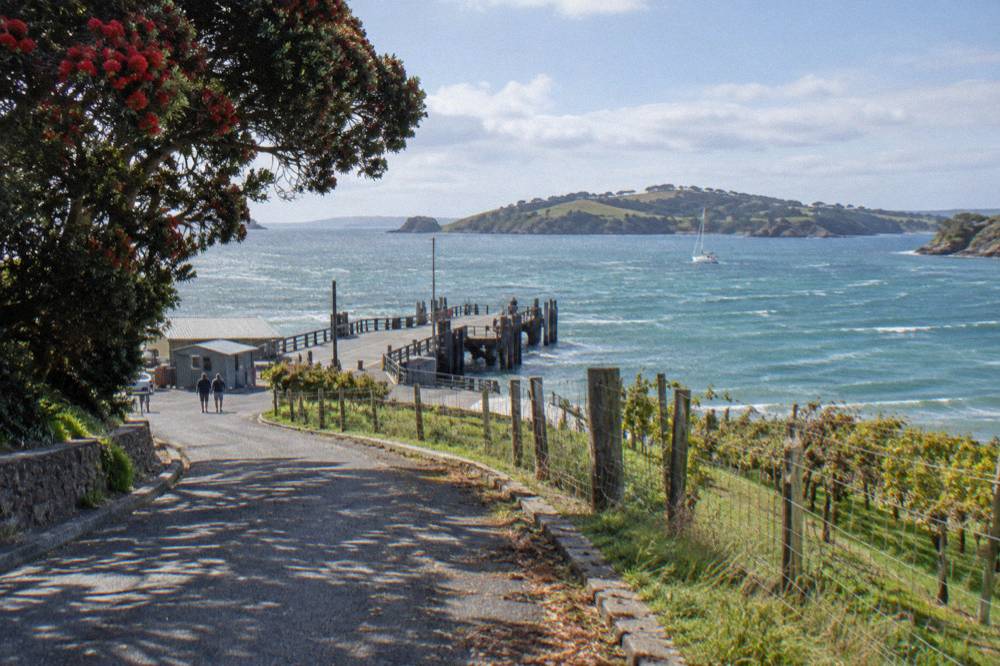
The terrain profile matters more than the distance. Twenty-four kilometres is a gentle morning on flat ground; on Waiheke the same distance adds up to a lot of short, steep climbing, much of it in pitches between bays. The cycling map rates the main loops moderate but hilly and reserves the word challenging for the routes beyond Onetangi, where around 16 km of unsealed road appears on some descriptions.
| Route or area | Distance | Surface | Difficulty per local maps |
|---|---|---|---|
| Matiatia to Oneroa links | Short connectors | Sealed | Hilly connectors into the village network |
| 5 Bays Ride | 24 to 32 km loop | Sealed | Moderate but hilly |
| Onetangi to Man O' War side | Extended, roughly 16 km unsealed in parts | Sealed and gravel | Challenging |
| Oneroa village area | Short | Sealed | Walkable and rideable |
If those grades sound like your kind of day, the e-bike tour on this page is the Premium eRide eBike Experience from eRide Waiheke, from NZ$119 per person, with no rating shown on its listing. The listing includes a high-performance charged eBike for the day, route maps through the Waiheke Guide App with the Five Bays Ride as a download, a pre-ride safety briefing, and staff who will build a paper-map route around what you want to see. Ferry tickets, food and vineyard tasting fees are excluded.
For context, here is how the three main ways of covering the island stack up against each other. Each has a place depending on your legs, your budget and how much wine you intend to taste.
The trio above is the honest shortlist for a Waiheke day built around moving under your own schedule: the e-bike, the hop-on hop-off bus with the ferry ticket bundled, and the guided bush hike that ends in wine. The rest of this guide works through which of those fits which traveller.
Can You Ride An E-Bike Between Vineyard Tastings?
You can, and many visitors do, but the tasting half of that plan needs the same caution as driving: New Zealand's alcohol limits apply to drivers, and the safest plan for a cyclist is to taste lightly, eat alongside any wine, and leave real distance between the last tasting and the ride. The eRide listing's own structure, self-guided routes with suggested stops, assumes riders pace themselves.
This is the part of the e-bike-versus-tour decision that brochures skip. A wine tour by van exists partly because an afternoon of tastings at a string of cellar doors and then piloting any vehicle, an e-bike included, down a winding coastal road, do not naturally belong together. New Zealand's limits for drivers aged 20 or over are no more than 250 micrograms of alcohol per litre of breath, or 50 mg per 100 mL of blood, and drivers under 20 may not drink at all, per the NZ Transport Agency. Those limits are written for drivers; for a cyclist, riding after tasting is a matter of judgement.
The judgement we would print is simple: one tasting flight, split or shared, with food, is a different proposition from a full three-winery circuit followed by a descent to the ferry. Island roads are narrow, buses use them, and the same hills that make the views make the descents fast. Riders who want a serious tasting day are better served by a tour with a driver, which is a large part of why guided tours dominate the island's wine tourism.
What Does The Premium E-Bike Experience Actually Include?
The Premium eRide eBike Experience lists from NZ$119 per person and includes a fully charged high-performance e-bike for the day, route maps via the Waiheke Guide App with the Five Bays Ride downloadable, a pre-ride safety briefing, help building a tailored route on paper, and access to expert local guides. Ferry tickets, food, drink and vineyard tasting fees are excluded.
Read that inclusion list carefully, because it defines the product. This is a self-guided day with expert backup: the e-bike, the route planning and the safety briefing are provided, but the day's shape is yours. That suits confident riders who want to stop where the mood takes them, linger at a beach, and treat cellar doors as options rather than an itinerary. It also means the costs of tastings and lunch arrive on the day, on top of the hire.
The listing shows no rating, and no traveller reviews have been published for it yet. What the listing does state is flexibility: suggested stops and experiences tailored to the rider, which on a hilly island is worth more than it sounds. A tailored route can skip the climbing beyond Onetangi, or build in a bus shortcut, in a way that a fixed tour itinerary cannot.
Practical notes follow from the island's shape. Riders start at Matiatia, where the ferry lands, so the day begins with the island's signature climb almost immediately. The hire runs within eRide's 9am to 5:30pm opening hours rather than a fixed tour window. Anyone comparing this with a five-hour guided tour is comparing two different shapes of day, not two versions of the same product.
E-Bike Hire Versus A Guided Wine Tour: Which Should You Book?
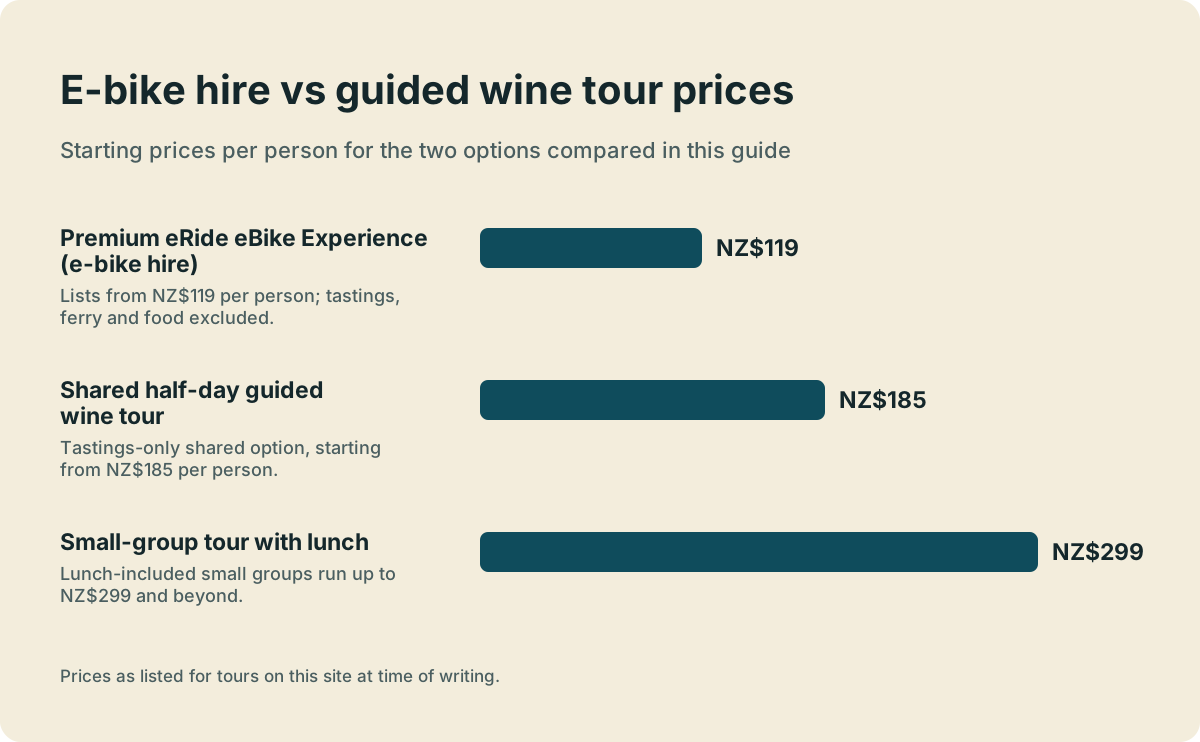
An e-bike day from NZ$119 per person suits riders who want freedom, are happy on hills, and will taste lightly or not at all. A guided tour, from NZ$190 per person for a shared tastings-only half day, up to NZ$299 and beyond for lunch-included small groups, suits visitors whose priority is the wine, because the guide drives, paces and narrates. The formats serve different days.
The price gap is smaller than it first looks once you add what each side excludes. The e-bike price covers the bike, the maps and the briefing, while tastings, lunch and the ferry ticket are extra. The guided tour prices generally cover tastings, and in several cases lunch, while the ferry ticket is likewise extra on almost every tour that starts on the island. Two days of similar spend can be assembled either way.
The real differentiators are alcohol and hills. If you want to taste properly at three vineyards, a tour with a driver is not a luxury, it is the mechanism that makes the day legal and relaxed. If you would rather have one glass with a view and spend the day moving, the e-bike turns the island into the attraction and the wine into a stop. Riders who want both sometimes split the visit, cycling one day and touring the next, which is where the overnight question and the island's how many days do you need on Waiheke Island discussion becomes useful.
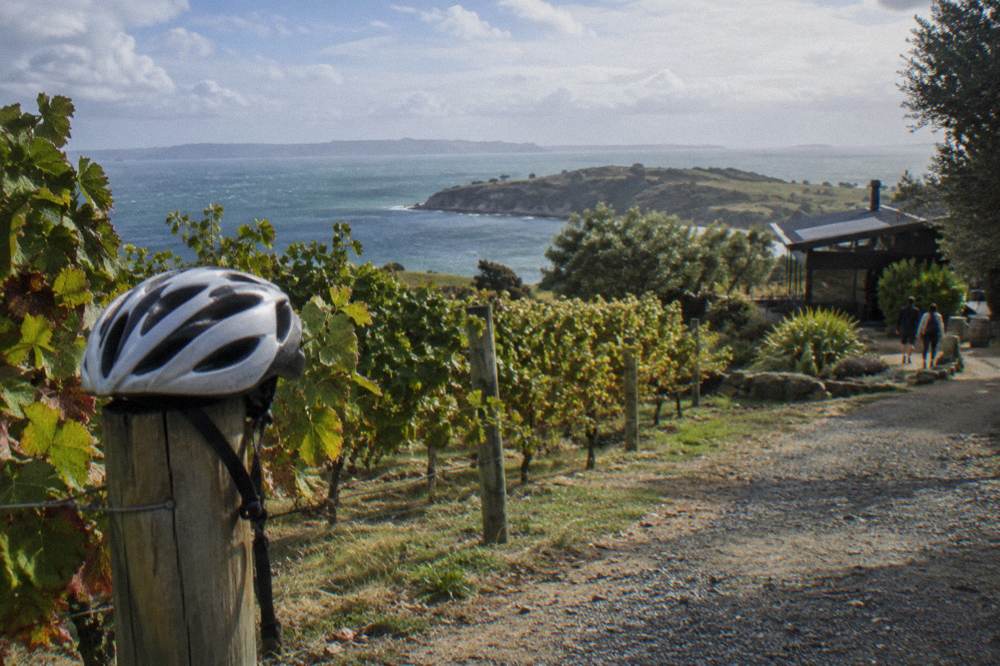
| Factor | E-bike hire (Premium eRide) | Guided wine tour |
|---|---|---|
| Price basis | From NZ$119 per person | From NZ$190 per person shared, from NZ$299 with lunch |
| Who drives | You, electric-assisted | A local guide |
| Tastings | Paid per cellar door on the day | Usually included in the tour price; check each tour's inclusions |
| Route | Flexible, self-guided with maps | Fixed itinerary, 3 vineyards typical |
| Best for | Riders, beach lovers, light tasters | Wine-focused visitors, non-riders |
| Review pool | No rating printed | Example: 4.9 from 387 reviews on the shared half-day |
For the tour side of the comparison, the most direct contrast with the e-bike among the tours we feature is the Shared Half-Day, Tastings Only tour from Waiheke Wine Tours Ltd, listed from NZ$195 per person for five hours, rated 4.9 from 387 reviews, with tastings, a local guide and taxes included and lunch, ferry and gratuities excluded. One guest review on that listing calls it simply: "Excellent tour. Caleb is a first rate guide and did a great job. The lunch at Batch Winery was unparalleled, including food, service, and view." The same island, seen from a van seat instead of a saddle.
What If The Hills Rule Out The Bike Entirely?
Two of the tours we feature cover the ground without pedalling. The Ferry and Hop-On Hop-Off Bus bundles the return walk-up ferry with an all-day bus pass, 16 stops and an 80-minute loop, from NZ$104 per person, rated 4.6 from 3,914 reviews. The Guided Bush Hike, Wine Tasting tour walks the island instead of riding it, from NZ$477 per person, rated 4.9 from 53 reviews, with two tastings and a picnic lunch included.
The bus is the closest thing to an e-bike substitute for visitors who want self-directed movement without the cardio. The Fullers360 Western Explorer runs daily from 10am at Matiatia on a 16-stop, 80-minute loop that takes in wineries, beaches and villages, and the Ferry and Hop-On Hop-Off Bus tour we feature is the bundle that includes the return ferry ticket, the day pass, an on-board host for local tips and live bus tracking via the operator's app. It is rated 4.6 from 3,914 reviews, from NZ$104 per person. Food, tastings and guided entries are paid on the day, and there is no hotel pickup.
The hike is the format almost nobody plans for and a surprising number of visitors end up loving. Terra & Tide's small-group guided bush hike covers the island's forest and coastal tracks with a guide trained in local flora, fauna and conservation, then finishes with two wine tastings, at Cable Bay Vineyards and Mudbrick Vineyard, and a picnic lunch, from NZ$477 per person over five hours, rated 4.9 from 53 reviews. A guest review on that listing reads: "This was a spectacular walk around the island with lots of breathtaking views, a delicious lunch and laptops at 2 vineyards. The guide, Lucy, was so positive and informative."
Between those two, the bike question reframes itself. If the hills were the only obstacle, the bus removes them at the lowest price of the tours on this page. If the objection was that cycling and wine tasting pull in opposite directions, the hike and the van tours resolve it properly, and the small group versus private wine tours comparison covers the next decision down that path.
Getting To The Island: The Ferry Numbers Cyclists Need
The Fullers360 ferry links Downtown Auckland with Matiatia on Waiheke, and from 12 October 2026 the off-peak adult return fare is NZ$48.50, applying to departures from Auckland from 1pm. Off-peak child return rises to NZ$21 and a family return to NZ$103. Most of the tours we feature meet you on the island, so cyclists generally need to buy the ferry ticket separately; only the private ferry-and-bus-pass tour and the ferry-and-explorer-bus bundle start in Auckland and include the crossing.
Those fares come from the operator's own fare announcement, and the off-peak definition is worth knowing: departures from Auckland from 1pm, or from Waiheke from 7pm, qualify. An afternoon crossing saves a meaningful sum per rider, at the cost of a shorter first day on the island. Sailings run frequently, with the operator listing up to 50 sailings a day on the walk-up service between Matiatia and Downtown, and more summer sailings announced for the 2026-27 season, including 30-minute peak frequency from 19 October 2026.
Cyclists arriving with their own bikes should note that SeaLink, the vehicle ferry operator, also carries foot passengers and bikes via Kennedy Point, though most visitors simply take the passenger ferry and hire on the island. The eRide listing starts at Matiatia, as does nearly every tour we feature, so the passenger ferry is the practical arrival route.
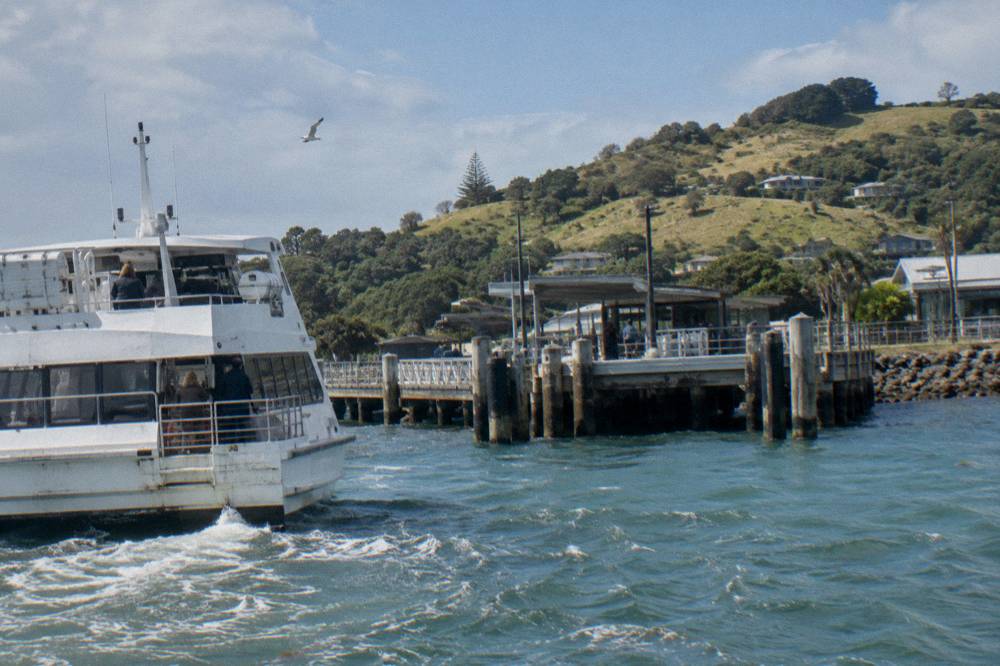
| Ferry ticket | Adult return | Notes |
|---|---|---|
| Walk-up | NZ$65 | Buy at the terminal or online |
| Off-peak | NZ$48.50 | Auckland departures from 1pm |
| Child return | NZ$29 | Ages 5 to 15 |
| Family (2 adults, 2 children) | NZ$138 | Walk-up basis |
The current fare detail sits on the operator's Waiheke destination page, which also carries the timetable. Always check there before travelling, because fares and sailing times move with the seasons.
Rules, Ages And The Drink-Driving Question For Riders
New Zealand's legal purchase age for alcohol is 18, the Waiheke Wine Growers site runs an over-18 gate before showing cellar door content, and for drivers aged 20 or over the limit is 250 micrograms per litre of breath or 50 mg per 100 mL of blood, with zero alcohol for drivers under 20. Police can test at the roadside. For cyclists the limits apply to driving, but the safe plan is not to ride after serious tasting.
The limits are published by the NZ Transport Agency and are not negotiable at the roadside. Breath-test limits are written for drivers, and the claim that cycling falls outside the rule is not established, so riding after tasting is a judgement call. That legal gap is not an invitation. An e-bike on a steep, narrow, winding road after three tasting flights is a bad idea by any measure, and the island's own riding guidance points riders toward e-bikes precisely because the roads demand full attention.
The practical version of the rule for a cycling wine day: eat properly, keep the poured wines to a small number, space them with food and water, and if the day grew more generous than planned, park the bike at the last vineyard and take the bus back. The hop-on hop-off pass covers the island's stops for a full operating day, which makes it a legitimate rescue plan as well as a touring option.
Age matters on the tour side too. Several of the tours we feature, including the sommelier tour, state a minimum drinking age of 18 for tastings, and the association's over-18 gate reflects the same law. Families cycling the island are unaffected: beaches, tracks and the coastal loops are free public access, and the free things to do on Waiheke Island guide lists the ones worth pedalling to.
Planning The Day: Season, Timing And What The Numbers Say
Long-term climate normals for the island's Awaroa Valley station average a January daily maximum of 24.3 C and a July maximum of 15.2 C, with rain spread across every month of the year, so summer rides are warm and winter rides are quiet, muddy in places and short on daylight. The best cycling months balance those numbers against ferry and cellar door schedules.
The seasonal pattern, drawn from NIWA's 1991-2020 normals rather than any forecast, favours the shoulder edges: autumn for milder days and thinner crowds, as the Auckland tourism guide's own seasonal wording puts it, and late spring for green hills before the summer heat. The Auckland tourism guide describes summer as the season of full operations and the highest crowds, and winter as quiet, with some cellar doors shifting to reduced hours, which is worth knowing before planning a winter loop around multiple tastings.
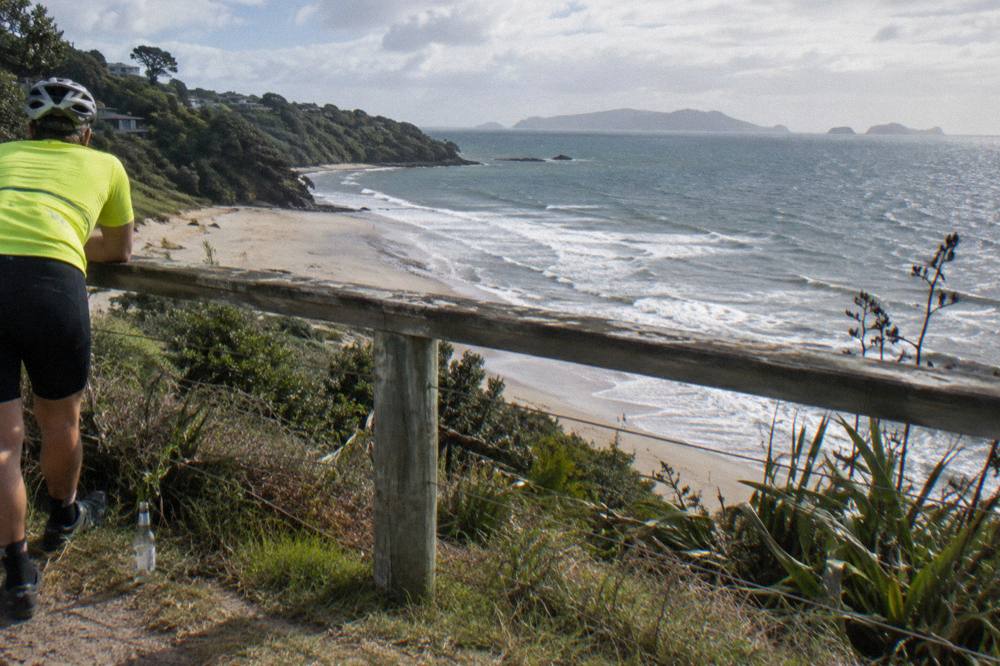
A workable e-bike day shape, put together from the tours we feature and the island's riding conditions: take a morning ferry, collect the bike at Matiatia, climb to Oneroa for coffee, ride the 5 Bays Ride with two planned cellar stops and a lunch stop, and leave enough battery and daylight for the descent back to the wharf. The eRide listing's staff-built route exists exactly for this, and the briefing covers the island's road quirks before you set off.
| Planning item | E-bike day | Guided tour day |
|---|---|---|
| Start point | Matiatia, from the ferry | Matiatia for island tours, Auckland terminal for three Fullers360 options |
| Typical length | Full hire day, 9am to 5:30pm | 4 to 7 hours per tour |
| Lunch | Bought en route | Included on most lunch-flagged rows |
| Tastings | Paid per stop | Tastings normally included, check each tour's inclusions |
| Weather exposure | Full | Mostly in a vehicle |
| Ferry ticket | Excluded | Excluded on nearly every row, included on the bus bundle |
The Honest Verdict For Cyclists Choosing
Choose the e-bike if the riding is the point: the island's hills, beaches and lookouts are the attraction and wine is a stop, not the itinerary. Choose a guided tour if the wine is the point and the hills are an obstacle. Visitors who genuinely want both should take the bus-and-ferry bundle or split the stay across two days, one in the saddle and one in the van.
The decision rarely comes down to money. A from-NZ$119 e-bike day with two paid tastings, lunch and a NZ$65 ferry ticket lands close to the from-NZ$299 lunch-included small-group tours once everything is counted. It comes down to alcohol and appetite. A full tasting circuit belongs with a driver; a full riding day belongs with a light hand on the cellar door. There are honest options for both, and Waiheke Wine Tours compares them across every format, from the food and wine tour listings to the hop-on hop-off bus and wine tours breakdown.
One last framing helps. The island's wine identity is real: 57 percent of its wine is red, with Merlot at 19 percent and Syrah at 18 percent of production, per the association, all grown across 216 hectares among 30 growers. Whether you meet those wines from a saddle or a van seat, the vines are on slopes, the slopes have views, and the ferry home runs late into the evening.
Common Questions About Cycling Waiheke Island
Is Waiheke Island good for cycling?
Yes, with conditions. The island is compact and scenic with sealed roads, but local cycling maps grade the main loops moderate but hilly and recommend e-bikes for most riders. The 5 Bays Ride, 24 to 32 km, is the flagship route.
Can you cycle between wineries on Waiheke?
You can, and cellar doors sit along rideable roads. The caution is alcohol: the safest plan is to taste lightly, eat alongside any wine, and keep the last stop well before the ride back, or park the bike and take the bus.
How much does an e-bike day on Waiheke cost?
The Premium eRide eBike Experience lists from NZ$119 per person, excluding the ferry ticket, food and tasting fees. Add the adult walk-up ferry return of NZ$65, or NZ$48.50 off-peak, plus cellar door costs on the day.
Do I need to book the ferry in advance?
The walk-up fare can be bought at the terminal, but the operator recommends pre-purchasing online for better pricing and shorter queues, and summer sailings fill. Off-peak fares apply to Auckland departures from 1pm.
What is the alternative if the hills are too much?
The Ferry and Hop-On Hop-Off Bus bundle, from NZ$104 per person, covers the island's 16 stops on an 80-minute loop with the return ferry ticket included. Guided wine tours from NZ$185 per person handle the driving entirely.