Can You Walk To Wineries On Waiheke Island?
Mostly not: the wineries sit too far apart on a hilly island. Here is what is walkable, what is not, and how to get between cellar doors without a car.
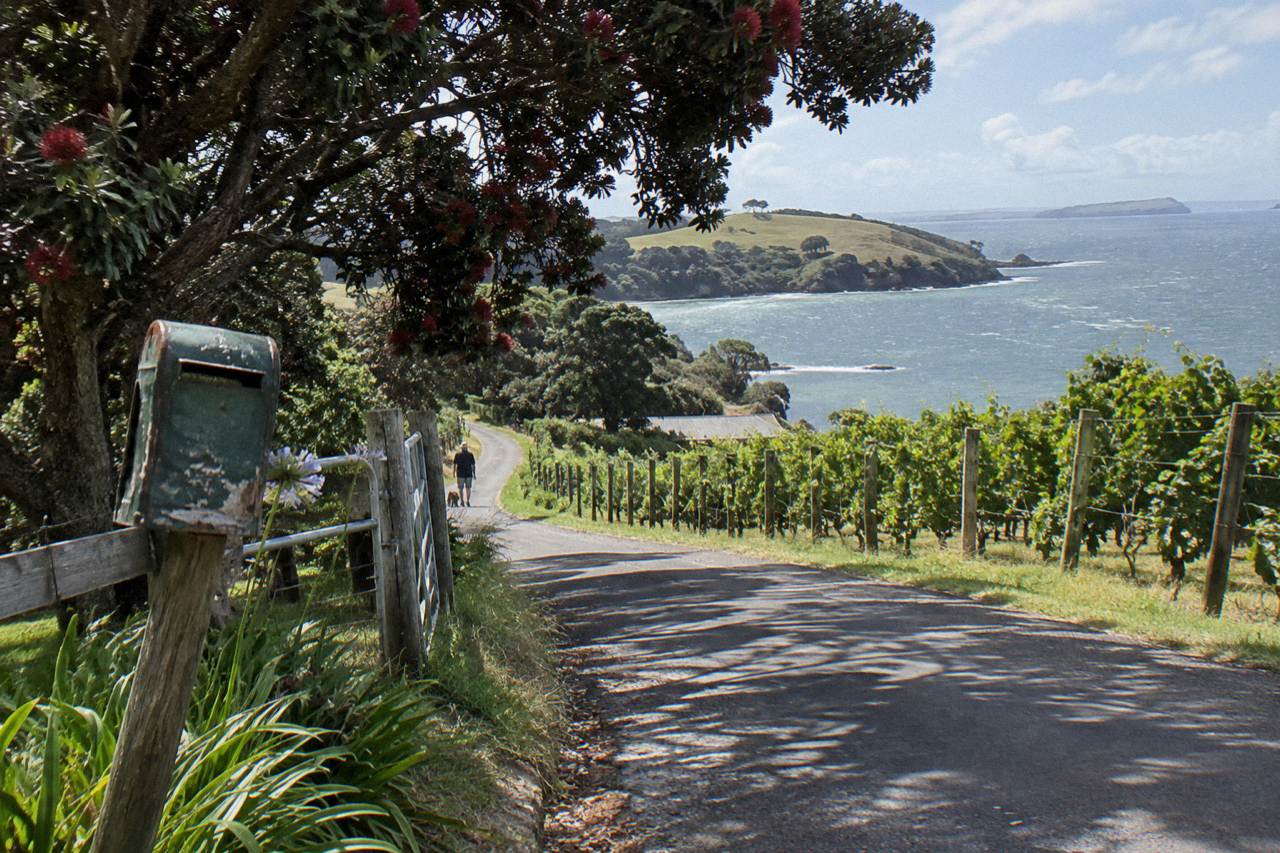
Mostly no, and the terrain is the reason rather than the distance alone. Waiheke is a hilly island where the cellar doors are scattered across separate valleys and ridgelines, so a day of walking between them turns into a day of road shoulders and steep climbs. Around Oneroa village, and between the ferry terminal and the nearest village, walking works well.
That distinction matters because the island rewards walkers in some places and punishes them in others. The tours featured on Waiheke Wine Tours reflect the same reality: nearly every guided option exists to move people between vineyards, because doing it on foot is not realistic for most visitors. The question is not whether you can walk on Waiheke, it is which parts repay walking and which parts need wheels.
Three practical alternatives exist: the hop-on hop-off bus with the ferry ticket bundled in, a self-guided e-bike, and a guided small-group tasting tour with pickup from island accommodation. Each solves the distance problem a different way, and the rest of this article explains when each one earns its price.
Which Parts Of Waiheke Are Actually Walkable?
Oneroa village and its beach are genuinely walkable, and the stretch from Matiatia wharf up to the village is a known walking route. Beyond that spine, walking between cellar doors stops being sensible, because the wineries sit in separate valleys linked by rural roads with climbs in between. The walkable island is real, but it is small and it does not include most cellar doors.
The walkable core is the island's main village. Oneroa has a wide stretch of white and golden sand, free public access and a village of cafes and shops behind it, open around the clock as a public beach. From the Matiatia ferry terminal, the village sits roughly 3 km away up a hill, a walk of somewhere between 20 and 40 minutes depending on your pace and the route, and it is the one stretch most visitors will walk at some point. Little Oneroa connects onward along a short coastal track, so a half-day of village wandering, beach time and a swim needs no transport at all.
What you cannot do on foot is string wineries together. Route planners put Matiatia to the Oneroa area at roughly 3 km with real elevation change; Oneroa to Onetangi is a further stretch of roughly 11 km of undulating road. Stonyridge, in Onetangi Valley, is one of the island's named cellar-door stops, reached on ridge roads rather than in a village you stroll through. Walking from Oneroa to a concentration of cellar doors means either that 11 km road section or narrow rural lanes shared with cars, minibuses and scooters.
The bus-plus-ferry bundle answers the walkability gap directly. The Western Explorer runs daily from 10am at Matiatia on an 80-minute loop with 16 stops, and the operator's own page lists Mudbrick, Cable Bay, Stonyridge and Batch among them, so you alight at a cellar door, taste, and catch the next bus. The listing includes the return walk-up ferry ticket, the all-day bus pass and an on-board host for local tips.
How Far Apart Are The Wineries Really?
Most cellar doors sit several kilometres apart, separated by hills and linked by roads built for cars rather than pedestrians. Only a handful of venues cluster near a village, and everything else sits down valley roads or up ridge tracks. A two-winery afternoon on foot can mean a couple of hours of road walking with no tasting at the end of each leg.
Matiatia to the Oneroa area is roughly 3 km. Oneroa to the Onetangi area involves road sections of roughly 11 km, with elevation changes that cycling guides describe as steep climbs between beaches and villages. Waiheke's wine country is concentrated around Onetangi Valley, the western ridge and a scattering of eastern bays, and the association counts around 30 growers across 216 hectares of plantings, roughly half with public cellar doors. Those cellar doors are spread across the island's valleys, not gathered on one street.
| Walk | Approximate distance | What it is really like |
|---|---|---|
| Matiatia wharf to Oneroa village | ~3 km | Uphill road and path, 20 to 40 minutes, the island's standard arrival walk |
| Oneroa beach to Little Oneroa | Short coastal track | Flat, easy, genuinely pleasant on foot |
| Oneroa area to Onetangi | ~11 km of road sections | Undulating rural road, traffic, not a walking route for most people |
| Between Onetangi Valley cellar doors | A few km each leg | Valley and ridge roads, steep in places, no continuous footpath |
The pattern to take from the table: the walkable parts of Waiheke are the village and coastal bits, and the winery parts are the road bits. A visitor who plans a walking wine day usually discovers this on the first leg, which is why the island's whole tour economy, from shared minibuses to private 4WD charters, exists to close that gap. The Waiheke ferry, timetable and fares guide covers the arrival side of the same trip.
What Are The Realistic Ways Between Wineries?
Four options do the job: the hop-on hop-off bus, scheduled public buses, taxis and shuttles, and guided tours that bundle the driving with the tastings. E-bikes suit confident riders, since the island is hilly with steep climbs between villages and beaches. On foot, only a few venue pairs are realistically connected, so plan on wheels for any multi-winery day.
The bus network is better than many visitors expect. Auckland Transport's Waiheke routes include the frequent 50A and 50B between Matiatia, Oneroa, Ostend and Onetangi, running roughly every 15 minutes between 7am and 7pm on the core alignment, plus the 501, 502 and a seasonal 503. Buses serve the main hubs and villages, which gets you to Onetangi, but individual cellar doors sit off the highway down valley roads, so a bus-plus-walk plan still involves road walking at each end. Taxis and shuttles fill that last leg: Waiheke Island Taxis runs a 24/7 island-wide service meeting ferries at Matiatia, and there is no Uber or Ola on the island.
Guided tours solve the problem most completely, because the vehicle waits at each venue. A few examples from the tours we feature show the range. The Wine and Scenery Tour with Wine Tastings by WaiTiki Tours, from NZ$250 per person with a 4.9 rating from 133 reviews, includes pickup and drop-off from island accommodations and tastings at three boutique vineyards. One guest review on that listing reads: "Nicky taught us so much about the island and its history and the people." The Half-Day Wineries Tour with Tastings by Waiheke Wine Tours Ltd, from NZ$195 per person, 4.9 from 387 reviews, runs tastings-only with a guide and driver. The Bush Hike with Wine Tasting by Terra & Tide, from NZ$477 per person, is the one tour that leans into walking itself: a guided hike with two tastings and a picnic lunch.
For visitors who want someone else to handle both the route and the pour schedule, that listing is the cleanest fit. A local guide moves you between vineyards with commentary along the way. Pickup at island accommodations is included, so the walking question disappears entirely.
Is The Hop-On Hop-Off Bus The Walking Alternative?
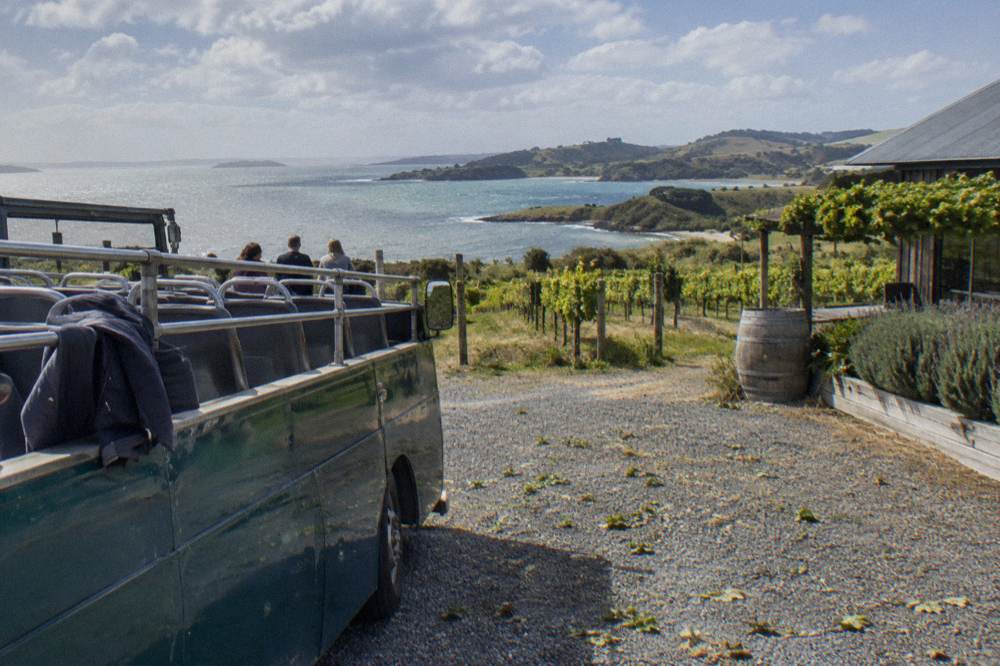
For most independent visitors, yes, because it converts the island's unwalkable road links into a loop you can join at any stop. The Western Explorer runs daily from 10am at Matiatia, covers 16 stops on an 80-minute loop, and stops at Mudbrick, Cable Bay, Stonyridge and Batch, per the operator's page. You walk as much or as little as each venue invites, then ride to the next one.
Among the tours we feature, the bundle option is Ferry and Hop-On Hop-Off Explorer Bus Tickets by Fullers360, 4.6 from 3,914 reviews, which includes the return walk-up ferry from downtown Auckland, the all-day bus pass and an on-board host, from NZ$104 per person. That is a rare Waiheke product where the ferry ticket genuinely is included; on nearly every guided wine tour, it is not, and you buy it separately. Food, drinks and cellar-door tasting fees are paid as you go, so the walking-doubter's budget maths is ferry-plus-bus plus whatever you taste.
The practical rhythm differs from a tour. A guided small-group product, like the Small-Group Tasting Tour with lunch from The Wine Tasting Company, from NZ$299 per person with a 4.9 rating from 82 reviews, holds to one timetable with three vineyards and lunch included. The bus lets you linger where you like and skip venues that do not appeal, at the cost of watching the clock for the next loop. In summer the operator adds frequency, and the Fullers360 page advises advance booking for the busiest days. The trade-off suits confident, unhurried travellers more than anyone trying to hit five cellar doors in five hours.
Can You Cycle Or E-Bike Between The Wineries?
You can, and e-bikes rather than ordinary bikes are the sane choice, because the island's terrain is hilly with steep climbs between beaches, villages and vineyard valleys. Cycling guides describe the popular Five Bays loop as 24 to 32 km of sealed but undulating road, and tasting wine on a hot climb is its own argument for a motor. Foot traffic and push bikes share the same narrow roads as cars and tour vans.
Among the tours we feature, the one cycling option is the Premium eRide eBike Experience by eRide Waiheke, from NZ$119 per person, with no rating printed on the listing. The price covers a high-performance e-bike for the day, route maps and a pre-ride safety briefing, with flexibility to follow suggested stops. Tastings, food and ferry tickets cost extra. The ferry is bought separately, as on nearly every tour that starts on the island. Riders comfortable with hills and shared roads get the closest thing to walking the island, with the climbs neutralised, and can stop at cellar doors on their own schedule.
The caution is drink-driving's cousin: taste responsibly on two wheels. New Zealand's limit for drivers aged 20 or over is 250 micrograms of alcohol per litre of breath, and under-20 drivers may not drink at all, per the NZ Transport Agency. Wine plus hills plus traffic is a combination to respect, and many visitors compromise: e-bike between two or three close venues, and take a bus or taxi for anything beyond. The e-bike and bike wine tours guide works through that choice in detail.
For a fit traveller who likes the idea of self-directed movement, that listing is the honest middle path. It hands over the bike, the maps and the briefing, and leaves the winery order to you.
Why Drink-Driving Rules End The Walking Debate
New Zealand's alcohol limits close the case for self-driving, which pushes the choice back to buses, bikes, taxis and tours. For drivers aged 20 or over the limit is 250 micrograms per litre of breath or 50 mg per 100 mL of blood; drivers under 20 may not consume any alcohol at all. Police can and do test at the roadside, which makes the designated-driver question a planning item, not an afterthought.
The numbers matter because cellar-door tastings add up quickly across a day. A flight of four or five wines at each of three venues is a meaningful amount of alcohol even with spitting, and the island's road network is exactly the kind of winding, climbing terrain where impairment shows. That is not a reason to skip Waiheke's wineries; the association counts 57 percent of the island's wine as red, with Merlot at 19 percent and Syrah at 18 percent of production, so there is a lot worth tasting. It is a reason to let someone else drive, which is precisely what the shared, small-group and private tours featured here exist to do.
The legal purchase age for wine is 18, and the winegrowers' association site runs an over-18 gate before showing cellar-door details, worth knowing if you are travelling with older teenagers. Beyond that, the planning question is simple. If you intend to taste properly, book something with a driver: the shared day tour with tastings and lunch by Ananda, from NZ$310 per person with 4.9 from 198 reviews, is one example among the many guided wine tours you can book, and a review on that listing notes the guide "knew the island very well". Walking, in that context, becomes what you do between the van and the cellar door, which is about right.
Which Option Suits Which Traveller?
Match the transport to your priorities rather than your fitness alone. Budget-first visitors do well on the bus bundle, schedule-first visitors on a guided tour, and freedom-first visitors on an e-bike. Everyone lands at Matiatia, so the real choice is about what happens in the two hours after the ferry berths, and that choice is easier to make before you sail than on the wharf.
| Option | Ballpark cost | Strengths | Trade-offs |
|---|---|---|---|
| Hop-on hop-off bus with ferry | From NZ$104 per person | Ferry included, 16 stops, your own pace | Tastings and food paid separately |
| Public bus (50A/50B) | Single-zone AT fare | Frequent, cheap, serves villages | Cellar doors sit off the busway |
| Guided small-group tour | From NZ$195 to NZ$360 per person | Driver, guide, tastings and often lunch arranged | Fixed itinerary and timetable |
| e-Bike hire | From NZ$119 per person | Total freedom, climbs neutralised | Hills, traffic, and alcohol on two wheels |
| Taxi or shuttle | Metered, book ahead | Direct, no schedule | Cost adds up across multiple venues |
The blog post on how long a wine tour runs pairs well with this decision, because duration drives how many cellar doors you can reach by any method. Most of the tours we feature run four to six hours; the explorer bus pass covers a full operating day; an e-bike day runs similar hours with your own pacing. A first-time visitor choosing one thing would do well to weigh the bus bundle against one guided tasting tour, and pick based on whether flexibility or a fixed, hosted schedule reduces more stress.
Whatever you choose, book it before the ferry rather than after. The guided tours we feature hold fixed seat counts, the bus bundle sells a day pass tied to a sailing, and the ferry itself runs up to 50 sailings a day in the walk-up service with departures from early morning to midnight, but the busiest summer days fill first on all of them. Walking to wineries on Waiheke is the one plan that cannot be booked, which is exactly why everything above it on this page can be.
Comparing prices works best on a whole-day basis. The bus bundle and the e-bike hire start within NZ$15 of each other, while guided tours begin at NZ$195, so the real question is how much of that difference you would give back in tastings and food on the cheaper options.
If a pure walking day is the appeal but the distances daunt you, the public bus is the nearest compromise: villages at a single-zone AT fare, short walks from the busway to the cellar doors, and a ride home when the hills or the tasting count catch up with you.
Two smaller calls complete the picture. Taxis and shuttles shine for a single venue and lose their appeal as the stops multiply, so treat them as a link rather than a loop. And if you ride an e-bike, plan the tastings around it rather than the reverse, since the trade-off listed above, alcohol on two wheels, is the one no booking can soften.
Common Questions About Walking To Wineries On Waiheke Island
Can You Walk To Wineries On Waiheke Island?
Mostly no. Oneroa village, its beach and the coastal tracks are genuinely walkable, but the cellar doors sit several kilometres apart across hilly terrain, linked by rural roads. Use the hop-on hop-off bus, public buses, taxis, e-bikes or a guided tour to move between venues.
Can you walk from the ferry to Oneroa?
Yes. Matiatia wharf to Oneroa village is roughly 3 km, mostly uphill, and takes 20 to 40 minutes on foot. It is the island's standard arrival walk and a pleasant one.
Are any wineries within walking distance of the ferry?
Not usefully. The cellar doors cluster around Onetangi Valley, the western ridge and scattered bays, all of which involve road walking of several kilometres from Matiatia. The bus, taxis and tours exist for that gap.
Is the hop-on hop-off bus good for wineries?
Yes. The Western Explorer runs daily from 10am at Matiatia on an 80-minute loop with 16 stops, and the operator lists Mudbrick, Cable Bay, Stonyridge and Batch among them. The bundled listing from NZ$104 per person includes the return ferry ticket.
Can you cycle between Waiheke wineries?
You can, and an e-bike is the better tool because the island is hilly with steep climbs between villages and vineyards. The Premium eRide eBike Experience lists from NZ$119 per person, with tastings and food extra.
Can you drink and drive on Waiheke?
No. For drivers 20 or over the limit is 250 micrograms of alcohol per litre of breath, and under-20 drivers may not drink at all. Police test at the roadside, so plan a driver, bus or tour.