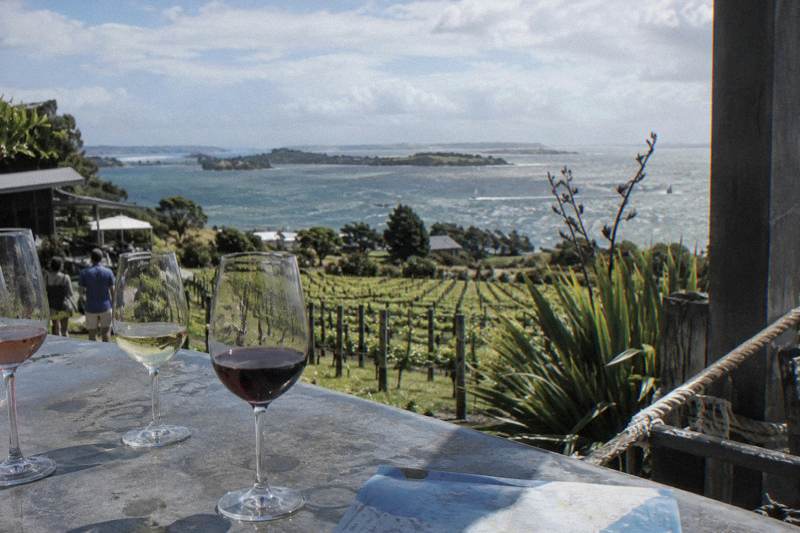
What Wine Is Waiheke Island Famous For?
Waiheke Island is famous for Bordeaux-style red blends and Syrah, with Chardonnay leading the whites. Here is what the region actually grows, pours and charges.
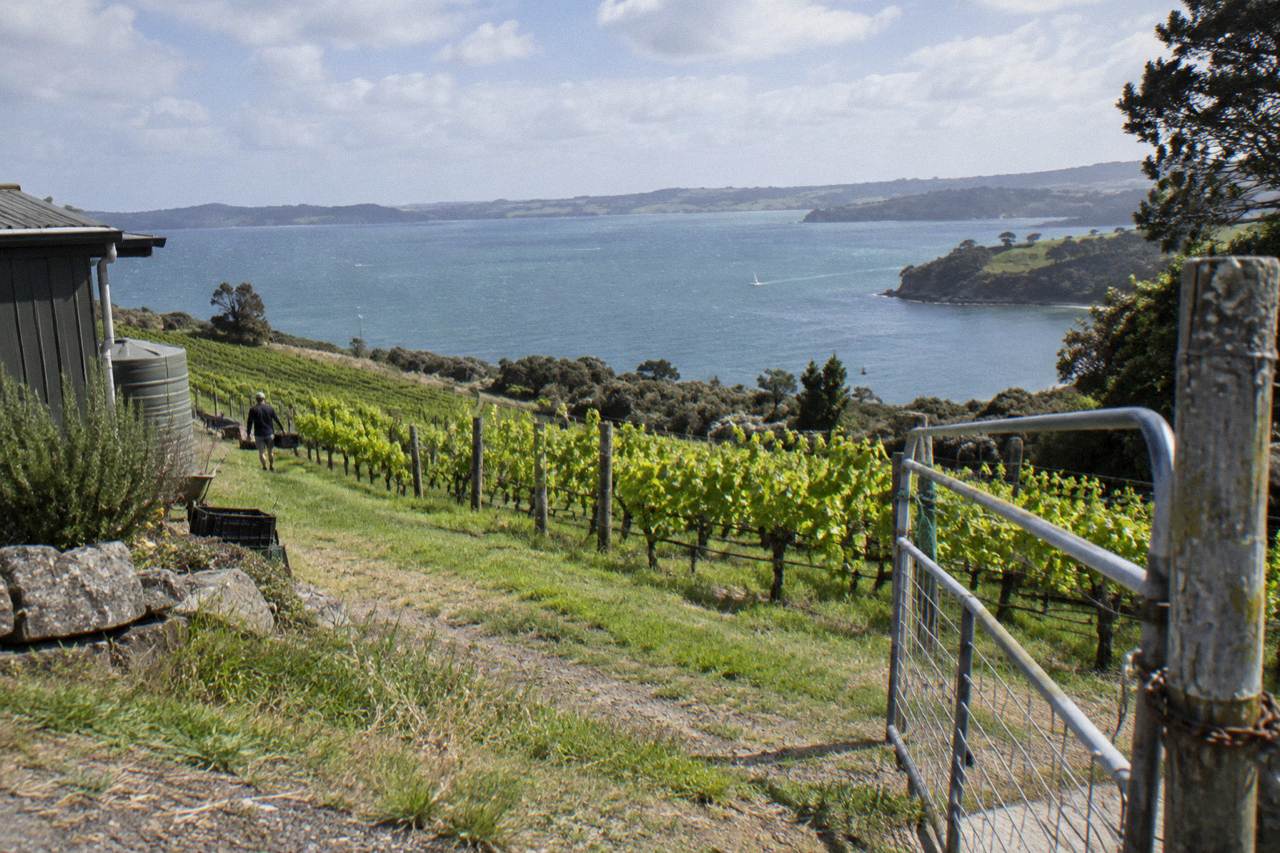
Waiheke Island is famous for full-bodied, Bordeaux-style red blends built on Cabernet Sauvignon and Merlot, for dry Syrah, and for Chardonnay as the leading white. The Waiheke Winegrowers Association states that 216 hectares are planted among 30 growers, and that 57 percent of the wine produced on the island is red: Merlot alone makes up 19 percent of production and Syrah 18 percent. That is an unusually red-hearted profile for New Zealand, a country otherwise known for Sauvignon Blanc, and it is the reason the island's cellar doors taste so different from the mainland's.
The numbers are worth committing to memory before you book anything, because they explain the shape of almost every wine list on the island. Chardonnay sits at 16 percent of production, Sauvignon Blanc at 12 percent and Pinot Gris at 10 percent, per the association's own breakdown of wines produced. A tasting flight here will typically open on a Chardonnay, move through a Syrah, and finish on a Bordeaux-style blend, and the tours that build their itineraries around that arc are the ones most worth your money. The shared scenic journey that stops at three vineyards for tastings, from NZ$190 per person, is built exactly for that comparison; the small-group Boutique Experience cellar tour, from NZ$209 per person, takes a similar three-vineyard structure at a smaller group size.
There is also a simple reason a wine region this small can be famous for anything at all. Two hundred and sixteen hectares is a tiny planted area by world standards, and the island's production is boutique in scale, which means most of what is grown is poured a short distance from where it was picked. The grapes do not travel far and neither do the wines: what you taste at a Matiatia-adjacent cellar door is estate-grown fruit from vines you can usually see from the tasting counter. That closeness between vine and glass is part of what visitors are responding to when they describe Waiheke tastings as different from city wine bars, and it is something no mainland Auckland tasting room can replicate.
Why Bordeaux-Style Red Blends Define The Island
The island's signature wine is a Bordeaux-style blend: Cabernet Sauvignon and Merlot, often with Cabernet Franc, Malbec and Petit Verdot in the mix. Merlot alone accounts for 19 percent of the island's production, with Syrah close behind at 18. The warm, dry microclimate suits these late-ripening varieties.
That last point is the whole story. Cabernet Sauvignon and Merlot need heat and a long, dry autumn to ripen fully, and most of New Zealand's wine regions are too cool or too wet to do it consistently. Waiheke, sitting in the Hauraki Gulf with a dry, sunny microclimate the growers' association credits for its "full-bodied reds", can. The association's regional profile describes the island as historically known for these Bordeaux-style blends, before branching into Syrah roughly a decade ago and, in the last two years, widening its plantings of white varieties.
Stonyridge is the clearest example of the style. Its association page describes a focus on Cabernet blends, Cabernet Sauvignon, Merlot, Cabernet Franc, Malbec and Petit Verdot, grown under organic viticulture, with cellar door tastings seven days from 11:30am to 5:00pm. Te Motu, established in 1989 by the Dunleavy family and still run by them, is described by the association as the island's oldest winery still in founding-family hands, and its flagship Te Motu cuvée is a Bordeaux-style blend aged extensively before release. If you taste only two reds on the island, a guide will usually steer you toward something in this family.
The blending itself deserves a word, because it is not a marketing gesture. In Bordeaux tradition, the five varieties each bring something the others lack: structure from Cabernet Sauvignon, plush mid-palate from Merlot, perfume and spice from Cabernet Franc, colour and depth from the two smaller players. Waiheke growers inherited that playbook and apply it to gulf-grown fruit, which is why island blends taste composed rather than jammy despite all that sunshine. A tasting that pours the blend alongside its component varieties, where a cellar door offers it, is the fastest education available; ask the pourer, because not every venue lists component tastings on the card.
For visitors coming from Australia or the United States, the useful calibration is this: think Left Bank structure with New World ripeness. The wines have the tannin and ageability of classic Bordeaux but the fruit weight of a warmer-climate New Zealand or Australian red. That combination is what the region built its reputation on, and it is why a guided tasting matters more here than in regions with a single flagship variety: the blends reward explanation, and a good guide will tell you which variety is doing what in the glass.
Wondering how to actually taste these blends without driving between cellar doors? The Waiheke Island Scenic Wine Journey, 4.8 from 325 reviews and from NZ$190 per person, stops at three vineyards for tastings with a local guide, with pickup and drop-off at Matiatia Wharf. Free cancellation terms are per the listing, and you can read the full tour page here, or Check availability for your dates. For a deeper primer on the cellar doors themselves, our guide to the best Waiheke wineries covers which venues pour which styles.
Syrah: The Island's Other Red
Syrah is the second pillar of Waiheke reds, at 18 percent of production, and the association describes the island's examples as award-winning and Northern Rhône in style: dry, savoury and structured rather than jammy. It overtook expectation here about a decade ago, when growers found the same warmth that ripens Cabernet also ripens Syrah beautifully.
Where the Bordeaux blends are broad and plush, the island's Syrahs are the wines that surprise visitors who know Australian Shiraz and expect sweetness. The association's grape varieties page lists numerous producers making Syrah alongside their blends, and several of the vineyards named on the hop-on hop-off bus route pour one. A hosted tasting that walks you from a Merlot-led blend into a Syrah, side by side, is the single most educational half hour available on the island, and a guided tasting such as the shared half-day wineries tour, 4.9 from 387 reviews and from NZ$195 per person, can include one, with the listing covering wine tastings and a local driver-guide.
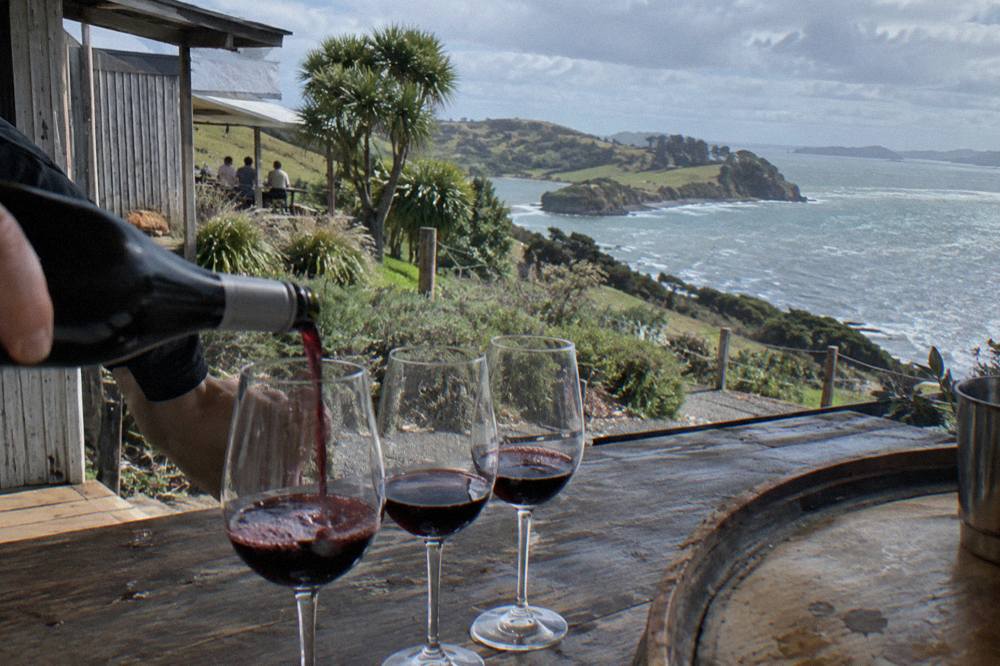
The Northern Rhône comparison is worth unpacking, because it tells you what to expect in the glass. Those French benchmarks, from Hermitage and Côte-Rôtie, are savoury, pepper-tinged wines with firm structure and moderate alcohol, and Waiheke growers explicitly chase that profile rather than the richer Australian Shiraz model. The result is a red that pairs with food the way the blends do, and the island's restaurants lean on it heavily. Whether a venue's Syrah leans floral or savoury varies by site and maker, so treat two cellar doors' versions as a genuine comparison rather than a repeat.
The practical takeaway for buyers: if a tour's inclusions list "wine tastings" at three or more vineyards, you will meet both red styles. The tour that names its venues, like Ananda's food and wine tour whose inclusions list hosted tastings at Kennedy Point Vineyard, gives you a place to research in advance. The association's grape varieties page lists which member producers make which varieties, so you can check a tour's named venues against it before booking.
Chardonnay And The Island's White Wines
Chardonnay is the island's leading white at 16 percent of production, followed by Sauvignon Blanc at 12 percent and Pinot Gris at 10 percent. The association notes white varietal plantings have increased in the last two years, so expect more white options on island tasting flights than even recent guides suggest.
Chardonnay suits Waiheke for the same reason the reds do: warmth builds ripeness and body. Island Chardonnays tend toward the fuller end of the spectrum, and the association lists several producers pouring them. Sauvignon Blanc here reads riper and softer than the Marlborough style the country is famous for, simply because the sunshine is different, and Pinot Gris rounds out the white card with texture and spice. None of these whites rival the reds in volume, but a flight that skips them misses half the story of what the island's climate can do.
For tasting purposes, the ordering matters. Most cellar doors pour lightest to heaviest, white to red, and the blend last. If you are on a structured tour with a guide, ask to revisit the Chardonnay after the Syrah: the contrast between the two is the clearest expression of the island's range. The gourmet food and wine tour format does this well, because its inclusions pair tastings with food: the Ananda half-day small-group tour, 4.9 from 349 reviews and from NZ$355 per person, lists a wine and food pairing at Casita Miro alongside its olive oil tasting and family-style tapas lunch.
The recent growth in white plantings also changes what a first visit looks like compared with even two or three years ago. Older travel coverage often describes Waiheke as a red-only destination, and that was closer to true then. With the association noting expanded white varietal plantings, several cellar doors now pour a broader white card, and a mixed flight may include two whites rather than the single token pour of the past. Rosé also appears across the island's lists, per the association's regional descriptions, and it sells strongly in summer when the beaches are the main draw. If your group includes people who prefer whites, this is no longer the wrong island for them.
What The Region's Numbers Look Like On Paper
The island's production profile, in the association's own figures, is 57 percent red wine from 216 hectares planted across 30 growers. Merlot leads at 19 percent, Syrah follows at 18 percent, Chardonnay at 16 percent, Sauvignon Blanc at 12 percent and Pinot Gris at 10 percent. Read together, they describe a region that is majority red by a wide margin.
| Variety | Share of Waiheke production | Style family |
|---|---|---|
| Merlot | 19% | Red, Bordeaux-style blends |
| Syrah | 18% | Red, dry and structured |
| Chardonnay | 16% | White, full-bodied |
| Sauvignon Blanc | 12% | White, riper than mainland styles |
| Pinot Gris | 10% | White, textured |
The shares come from the growers' association and describe production, not cellar door listings, so an individual venue's list can look quite different from this table. A producer focused on Cabernet blends may pour almost nothing white; a bistro-style cellar door will carry a broader card. The table is most useful as a prediction of what a mixed three-vineyard tasting will cover: at minimum, expect a Chardonnay, a Syrah and a blend, in roughly that order. The wider set of guides lives on Waiheke Wine Tours.
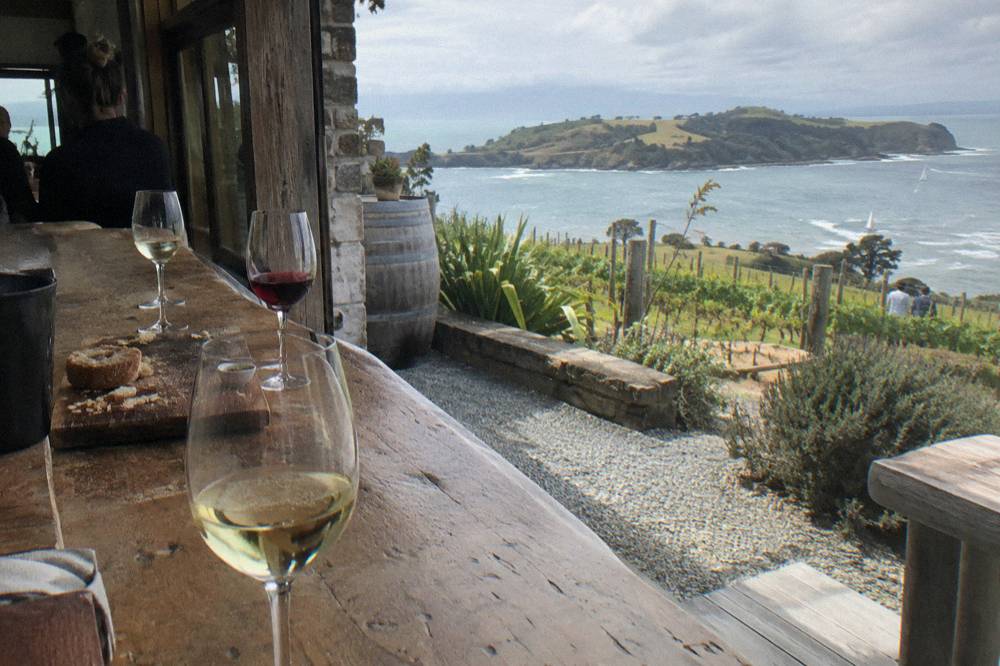
It is also worth understanding what the numbers cannot tell you. The association's shares describe volume of production, so a variety grown heavily by one large producer can outrank a variety grown in small amounts by many. Merlot's 19 percent partly reflects its role as the workhorse of the blends rather than a host of standalone Merlot bottles; much of it ends up inside blended wines. Similarly, the roughly 30 growers include operations of very different scale, from estates with full restaurant operations to tiny family vineyards pouring by appointment. The island's boutique scale cuts both ways for visitors: the variety is real, but no single tour or cellar door can show you all of it in a day.
Tasting Tours That Pour The Island's Signature Styles
Tour itineraries reveal which styles you will actually taste: the guided formats on the island stop at three or more vineyards with tastings included, and their inclusions lists name the venues. Prices run from NZ$190 per person for a shared tastings-only tour to NZ$349 for a small-group wine, gin and food format. Every tour listed below starts on the island, so the ferry fare is separate.
The choice between them is mostly a choice of group size and lunch. The tastings-only shared tours are the cheapest way to taste the island's signature styles. The lunch-inclusive formats cost more but pair the wines with food, which suits the fuller-bodied reds. Here is how the main tasting-led options compare on the facts that matter.
| Tour | Format | Price | Rating | Tastings |
|---|---|---|---|---|
| Waiheke Island Scenic Wine Journey (3 vineyards) | Shared | from NZ$190 pp | 4.8 from 325 reviews | 3 vineyard stops, tastings included |
| Waiheke Island Half-Day Wineries Tour With Tastings | Shared | from NZ$195 pp | 4.9 from 387 reviews | Tastings included, lunch extra |
| The Boutique Experience Cellar Tour | Small group | from NZ$209 pp | 4.9 from 115 reviews | 3 premium tastings, 10 to 15 wines |
| Boutique Wine, Gin and Food Tour | Small group | from NZ$349 pp | 5 from 18 reviews | All tasting fees plus lunch included |
| Waiheke Island Wineries Day Tour With Tastings and Lunch | Shared | from NZ$310 pp | 4.9 from 198 reviews | 3 vineyard tastings plus lunch |
The Boutique Experience tour deserves a note on its numbers: 10 to 15 wines tasted across three boutique vineyards, per its inclusions list. Note its format carefully, though: the vineyard lunch stop is listed with the cost of lunch not included, so the NZ$209 entry price covers tastings and transport rather than a full food-inclusive day. A review from one recent guest on the Ananda day tour puts the format plainly: "Great way to enjoy some of Waihekes vineyards in a casual manner, plus a yummy lunch to end trip. Small group so make new friends & enjoyed every minute of trip." Ferry tickets are not included on any of these; the walk-up adult return fare is from NZ$65, and off-peak returns from NZ$48.50 for departures from Auckland from 1pm, per the operator's current fare page, which our ferry fares and tickets guide covers in full.
Group size shapes the experience more than price does. A shared tour of a dozen or more strangers moves on the guide's clock; a small-group or private format lingers where the group wants to linger, which matters when the third tasting of the day is a Syrah worth sitting with. If a blend-first education is the goal, say so at the first stop: guides on all these tours route between vineyards daily and will usually adjust the emphasis within the day's venue list. And if you want the island's varieties explained rather than just poured, the private customizable wineries tour, 5 from 19 reviews and from NZ$790 per person, lists premium wine tastings at up to three vineyards with pickup and drop-off from Waiheke accommodation, letting you set the pace entirely.
Michelin Stars And Vineyard Dining
Two Waiheke vineyard restaurants, Mudbrick and Tantalus Estate, each received one Michelin Star in New Zealand's inaugural Michelin Guide, announced in late June 2026. The guide was the first for the country and for Oceania. It put the island's food-and-wine pairing scene on the international map overnight.
The stars matter for wine visitors because they anchor a food-first style of visit: a long lunch at a starred vineyard restaurant, with the estate's own wines poured alongside. Mudbrick's association page lists two tasting flights of five wines, a Standard flight at NZ$10 and a Premium flight at NZ$15, with the cellar door open seven days from 10am to 5pm. Plantings there began in 1992, and the venue is still owned and operated by Nick and Robyn Jones. A wine-and-food pairing format, rather than a straight tasting tour, is the natural fit for this side of the island: tours like the gourmet food and wine option, 4.9 from 310 reviews and from NZ$325 per person, include a wine and food pairing at Casita Miro and a family-style Mediterranean tapas lunch with a glass of wine.
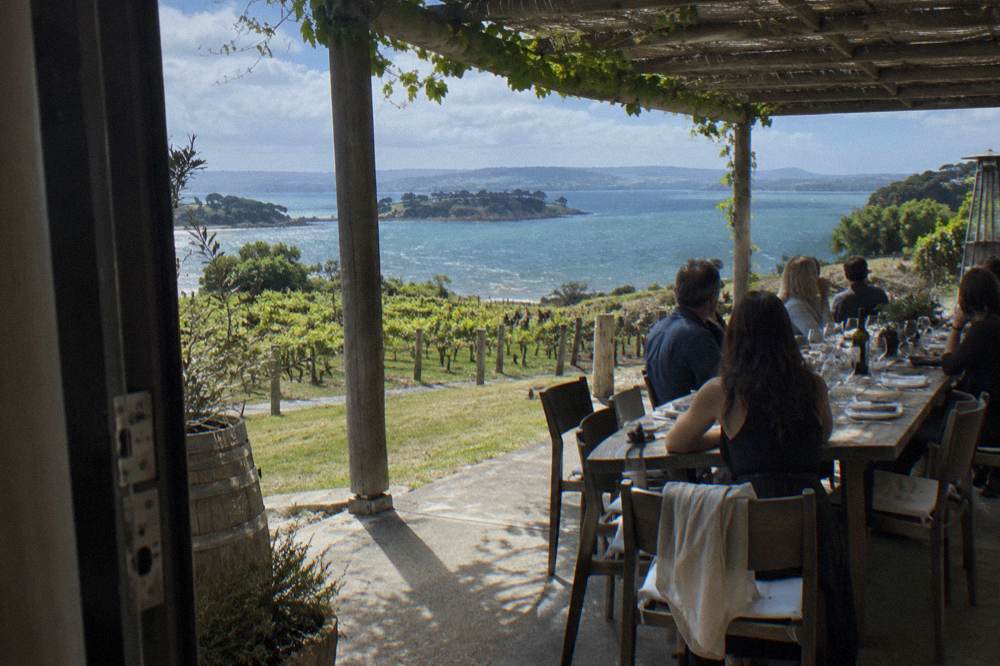
Timing note: hours can shift for private functions, and the association's pages carry the current cellar door hours, so check before you build a lunch around a specific venue. Restaurant bookings at starred venues are a separate matter from any tour booking and need to be made directly. The combination many visitors settle on is a guided tasting tour for the middle of the day and a separate, direct booking at one starred restaurant for a future visit, or a second day on the island; trying to compress both into one day usually means rushing the second. Our Waiheke day trip guide covers how to split a single day realistically.
How The Season Shapes What You Can Taste
Waiheke Island of Wine, the association's month-long October celebration, ran from 1 to 31 October 2026 with winemaker dinners, masterclasses and cellar door exclusives. Outside such events, tasting access follows the season: some cellar doors run reduced or weekend-only hours in winter, while summer brings full operations and the busiest ferry sailings.
The Auckland tourism guide's own seasonal wording describes summer from December to March as peak, autumn from April to May as a milder "sweet spot" that coincides with grape harvest, and winter from June to August as quiet, when some cellar doors shift to reduced hours. For a wine-focused visit, that makes autumn an attractive window: harvest is just finishing, the crowds thinner, and the tasting rooms less rushed. The 2026 Auckland-region harvest was a testing one, with heavy January rainfall forcing some early Chardonnay picking, but growers reported the variety stood out for clarity and freshness, per the regional harvest review. Our longer piece on the best time of year to visit Waiheke for wine works through the month-by-month detail, and it is the right companion read before you fix a date.
The shoulder seasons also change what a tasting room conversation can be. In the quieter months, pouring staff have more time, and the person behind the counter is more likely to be the person who made the wine. Summer delivers the opposite trade: everything is open, the decks are full, and the pace is faster. Neither is wrong, but if the goal is understanding what Waiheke wine is famous for rather than simply drinking it, a May or September weekday serves that goal better than a February Saturday. Whatever the month, the ferry runs frequently, with up to 50 sailings a day on the walk-up service per the operator's own update, so the calendar constrains your tasting bookings more than your transport.
Practically, whichever season you choose, book a guided tasting tour rather than self-driving. The drink-drive limit for drivers aged 20 and over is 250 micrograms of alcohol per litre of breath, and under-20 drivers may not drink at all, per NZTA's alcohol limits page. Tastings across three vineyards add up quickly, and the island's hills are unforgiving. Every guided format on this page exists partly for that reason.
Common Questions About Waiheke Island Wine
What Wine Is Waiheke Island Famous For?
Waiheke is famous for full-bodied Bordeaux-style red blends of Cabernet Sauvignon and Merlot, for dry Syrah, and for Chardonnay as the leading white. The growers' association figures show 57 percent of production is red, with Merlot at 19 percent and Syrah at 18 percent.
Does Waiheke Make Sauvignon Blanc?
Yes, at 12 percent of production, though it is a smaller share than Chardonnay's 16 percent. Island Sauvignon Blanc reads riper and softer than the Marlborough style because of the warmer, drier microclimate.
Which Wineries On Waiheke Have A Michelin Star?
Mudbrick and Tantalus Estate each received one Michelin Star in New Zealand's inaugural Michelin Guide, announced in late June 2026. It was the first Michelin Guide issued for the country.
How Much Do Wine Tastings Cost On Waiheke?
At the cellar doors where fees are published, Mudbrick pours a Standard five-wine flight at NZ$10 and a Premium flight at NZ$15, and Stonyridge runs weekend vineyard tours with two tastings at NZ$10 per person. Many venues list current fees only on their own pages, so check ahead.
Do Waiheke Wine Tours Include The Ferry?
Almost none do. Nearly every island wine tour starts at Matiatia Wharf and excludes the ferry ticket, which you buy separately. The clear exceptions are the ferry and hop-on hop-off bus ticket and the private tour bundling ferry passes, lunch and a bus pass. The private sommelier tour also lists ferry tickets, though its listing is inconsistent, as the tour itself starts at Matiatia.