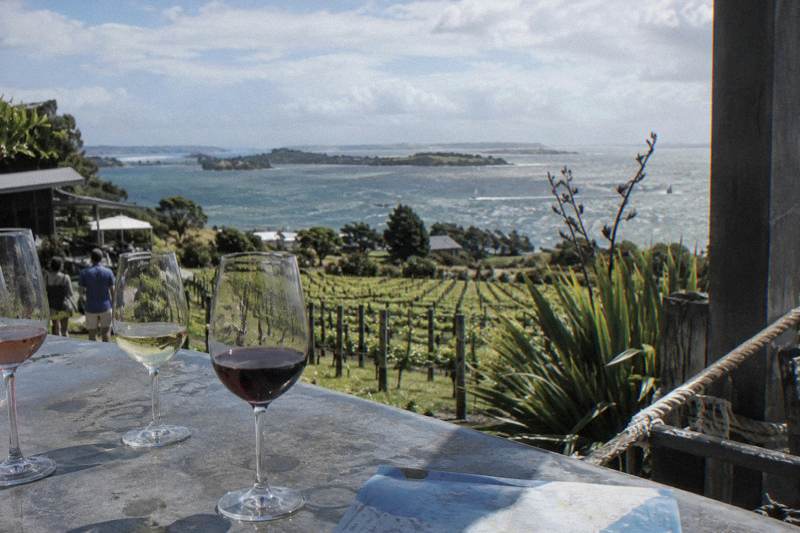
What Is The 20 Minute Wine Rule?
The 20 minute wine rule explained at a hedged, general level: what tasters commonly mean by it, how it shapes tasting pace, and how Waiheke tours space out their vineyard stops.
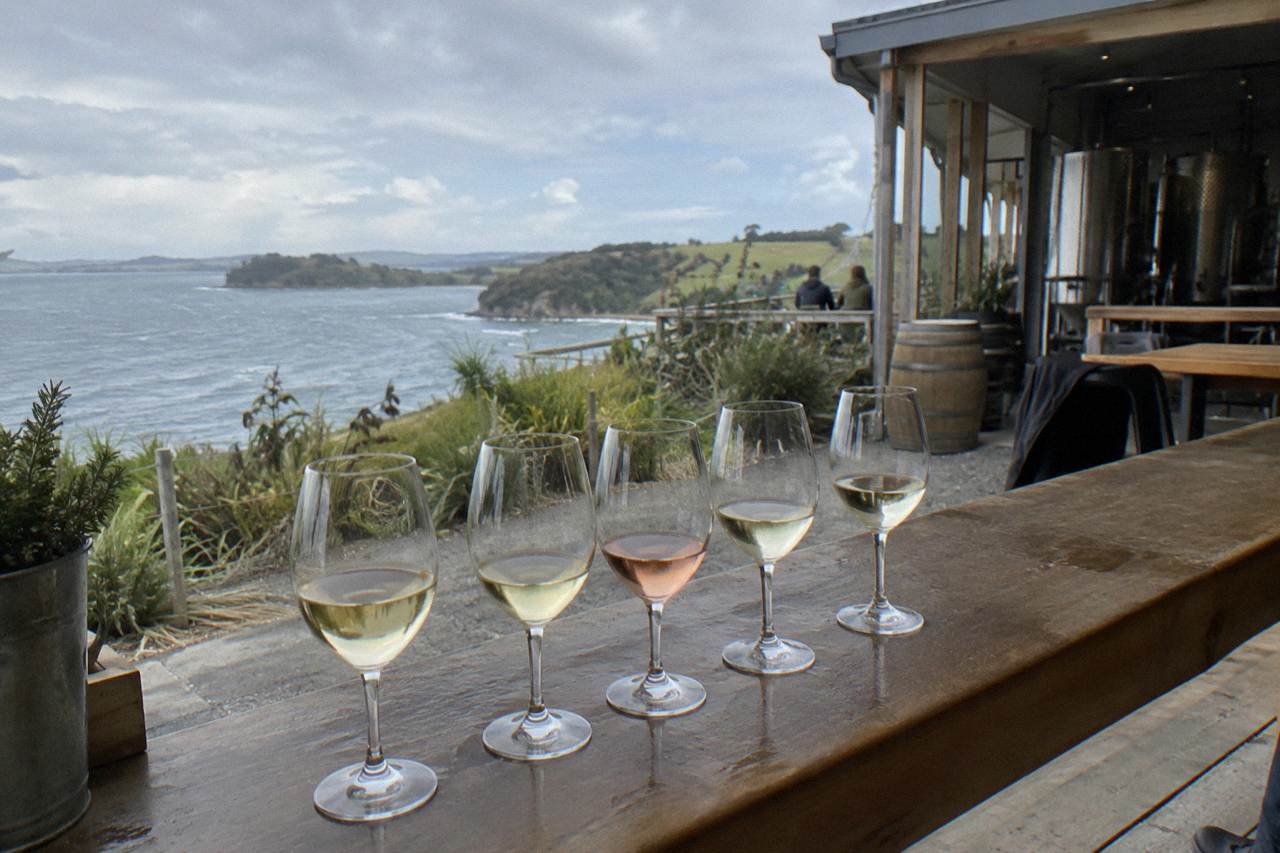
What Is The 20 Minute Wine Rule?
The 20 minute wine rule is a commonly cited piece of tasting advice that asks for patience in two forms: give a wine roughly twenty minutes before you judge it, whether that time passes in the glass or in the bottle, and give yourself a similar pause between wines rather than tasting one right after another. It is folk wisdom rather than laboratory science, and no island source defines it precisely. What is verifiable is how it plays out in practice, because a structured day of tasting, such as a guided Waiheke tour, naturally spaces pours across hours rather than minutes, which is the spirit of the rule applied to an entire day.
Nobody regulates the phrase. You will not find it on a winegrowers' association page or in a booking listing. It circulates in tasting rooms and wine writing as a rough habit: wine poured from a freshly opened bottle can smell tight or muted at first, and after some exposure to air the aromas seem to unfurl. Twenty minutes is the round number people attach to that window. It is also the round number people attach to a palate reset, a stretch of water, a bite of bread, a look at the view, before the next pour arrives.
The reason it survives is that both halves of it track something real about a long tasting day. Wine does interact with oxygen, and palates do fatigue. Neither effect runs on a stopwatch, and neither respects a round number. Treat the rule as a pacing cue rather than a chemistry claim, and it becomes genuinely useful, especially on an island where the distances between vineyards impose pauses whether you planned them or not. The rule is doing its job the moment you stop checking your watch and simply slow down.
There is a second, quieter version of the phrase that circulates among hosts and regulars: twenty minutes is also the span of attention worth giving a wine before you decide you do not like it. First impressions at a counter are notoriously unreliable. A wine that seems austere on sip one can read generous by the end of a short conversation about it, and the reverse happens too. The rule, in this reading, is less about the liquid changing and more about the taster settling.
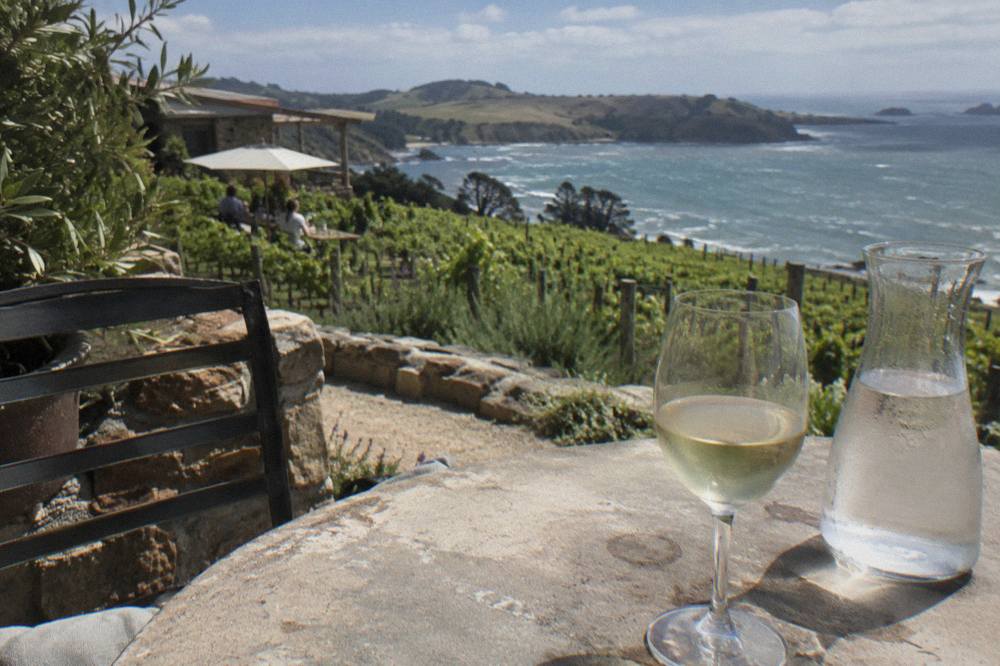
Does Wine Really Open Up After Twenty Minutes?
Yes, wine really does open up with air, but not on a fixed twenty-minute schedule. The honest answer is that every wine changes when exposed to air, yet the size and speed of that change vary enormously from bottle to bottle, which means "twenty minutes" is best treated as a habit rather than a measured constant. No published research pins the effect to a twenty minute window, so treat the rule as a loose guideline rather than a measured formula. What the island's own winegrowers association does document is the character of the wines: 57 percent of Waiheke wine is red, with Merlot at 19 percent and Syrah at 18 percent of production, full-bodied styles that tasters often describe as evolving in the glass over a sitting.
The mechanism behind the folk wisdom is simple enough. When wine leaves the bottle it meets oxygen, and aromatics that were effectively locked up begin to volatilise, meaning they reach your nose. Tannic, structured reds, exactly the Bordeaux-style blends this island is known for, tend to show this more than light whites. A wine that seems stern on first sip can read softer and more aromatic ten or twenty minutes later. Equally, a delicate wine may simply not change much, and a very old wine can fade rather than bloom, which cuts the other way and argues for drinking those sooner rather than later.
None of this is unique to Waiheke, but it is worth knowing here because of what the region grows. The association's own figures, published on its wine styles page, show a region built on structured reds with Chardonnay at 16 percent as the leading white, followed by Sauvignon Blanc at 12 percent and Pinot Gris at 10 percent. Those are styles that reward patience in the glass, at least the reds do. A tasting flight at a cellar door moves faster than twenty minutes per wine, of course, and that is fine: the pour is a preview, not a final verdict.
This is also where the rule does its quiet work. If you taste a flight, find a wine you like, and then order a glass of it with lunch, the glass you drink over half an hour will almost certainly show differently from the tasting pour. The glass has time, food alongside it, and a sitting rather than a stand. Tasters who know this stop panicking when the first sip disappoints. Twenty minutes and a second look is cheaper than a bottle you regret, and it is a good deal cheaper than writing off a whole style because one tight pour arrived at the wrong moment.
Temperature plays its own supporting role in the same drama. A pour that comes straight from a cool cellar can read tight and muted simply because it is cold, and a few minutes at room temperature will soften it with no oxygen involved at all. Tasters sometimes credit "breathing" for what is really warming. Both effects point to the same advice, though, which is that the first minute of a tasting pour is the least representative minute the wine will ever give you, and any pause, for any reason, improves the sample.
How Do Waiheke Tours Pace Their Tastings?
Structured tours pace a tasting day by geography and itinerary rather than by stopwatch: three vineyard stops spread across roughly five or six hours, with travel, commentary and lunch acting as the built-in pauses the 20 minute rule gestures at. The tour durations make the rhythm plain. The Waiheke Island Small-Group Wine Tasting Tour runs 5 hours 30 minutes for tastings at three vineyards plus lunch, from NZ$299 per person, rated 4.9 from 82 reviews, and one guest review on the listing calls it a "fantastic way to see some highlights on waiheke island," wineries included.
Line up a few of the tours side by side and the pacing logic holds across formats. The Waiheke Island Wine and Scenery Tour with Wine Tastings runs 6 hours for its three boutique vineyard stops, from NZ$250 per person, with a rating of 4.9 from 133 reviews. The Flavours Tour by Waiheke Island Wine Tours, from NZ$335 per person and rated 4.9 from 39 reviews, spends its 5 hours 30 minutes on three venues plus lunch, splitting attention across wine, olive oil and beer or spirits. The half-day shared tour with tastings only, from NZ$195 per person with a 4.9 rating from 387 reviews, compresses to 5 hours and skips lunch. Longer days, more spacing; shorter days, tighter pours.
| Tour (as listed) | Duration | Stops and structure | Lunch | From |
|---|---|---|---|---|
| Small-Group Wine Tasting Tour | 5 hrs 30 min | Tastings at 3 vineyards, some paired with food | Included | NZ$299 per person |
| Wine and Scenery Tour | 6 hrs | Tastings at 3 boutique vineyards | Not included | NZ$250 per person |
| Flavours Tour (max 11) | 5 hrs 30 min | 3 venues: wine, olive oil, beer/spirits | Included | NZ$335 per person |
| Half-Day Wineries Tour | 5 hrs | Wine tastings, guide, transport | Not included | NZ$195 per person |
What the table shows is the rule applied at day scale. Even the tightest itinerary leaves each vineyard roughly ninety minutes, of which the tasting itself is a fraction. The rest is boarding the van, watching the bays roll past, walking to the cellar door and standing at the counter while the host sets out glasses. If a wine needs twenty minutes to show itself, a tour hands you that twenty minutes whether or not you asked for it, and usually hands it to you somewhere with a view.
Guides also manage palate fatigue deliberately. A review from the wine and scenery tour describes tasting at three wineries and a lunch in between, with the guide teaching "so much about the island and its history and the people" on the drives. That commentary is not filler; it is the reset between flights, and it occupies the exact interval the rule asks for. The same pattern shows in the Flavours Tour's review, which praises "the balance of the wine, oils, brewery and the views": alternating what you taste keeps any one sense from wearing out.
The lunch stop deserves its own credit in this system. On the Small-Group tour the listing promises either a shared platter style lunch with a glass of wine or a main, and on the Ananda food and wine tour, from NZ$355 per person with a 4.9 rating from 349 reviews, lunch is a family-style Mediterranean spread with wine. Either way, the middle of the day is handed over to food, water and one wine at length, which is the single longest pause in the whole itinerary and the place where the "second look" happens naturally.
How Should You Apply The Rule At A Cellar Door?
At the cellar door, apply the rule as three simple habits: swirl each first pour and wait before you judge it, reset your palate between flights with water and food, and give structured reds the time they need by tasting them last rather than leading with them. None of these needs a timer, and all of them work at a standing counter as easily as at a table. They are easier still on a guided tour, where the host sequences the pours and the vehicle enforces the gaps, than on a self-driven crawl, where the temptation is to rush.
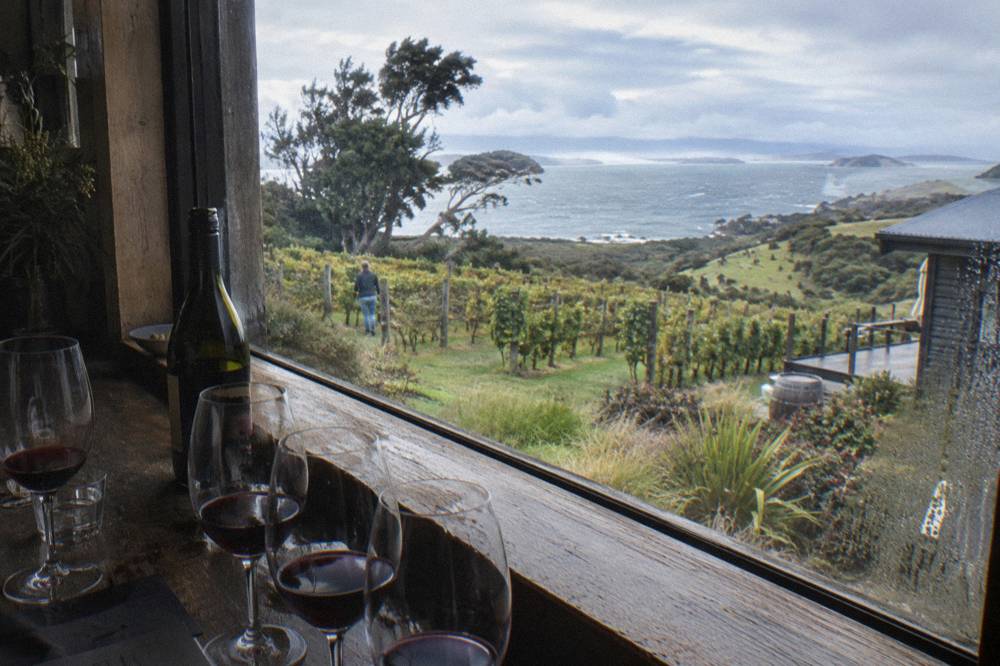
At the counter itself, a few concrete behaviours follow from the rule. Give the first sniff, then give it another minute or two before concluding anything about a wine, particularly if it is a Syrah or a Bordeaux-style blend, the styles the association says dominate the island's 216 planted hectares among 30 growers. Sip water between wines; every venue pours it. Eat something when food appears, and note that several island tours build pairings in, the Small-Group tour's listing promising tastings at three vineyards with some "paired with food." Fatigue, not air, is what actually ruins most long tasting days.
Between venues, the island does the work. Travel from one cellar door to the next takes real minutes on real roads, and riders arrive at the next counter with something close to a clean palate. Tasters driving themselves should treat those gaps as safety margins, not optional. New Zealand's limit for drivers aged 20 and over is 250 micrograms of alcohol per litre of breath, and under 20 it is zero, per the transport agency's alcohol rules. Tasting pours are small, but a full day of them adds up, which is the strongest practical argument for a tour with a driver.
One more application concerns volume. A tasting pour is a few sips, not a glass, and a flight of five is still five small exposures. The rule's spirit is moderation across a day: slow down, pour less, pause more. Guests who apply it end the day able to remember the wines, which is the point of the exercise. Guests who ignore it end the day having tasted a great deal and retained very little, which is the failure mode the folk wisdom exists to prevent.
Spitting, worth naming plainly, is the professional version of the same discipline. Cellar door staff will not blink if you use the spittoon; it is standard practice among the people who taste wine for a living, precisely because it extends the number of wines a palate can assess. Visitors who find it unromantic can settle for smaller sips and longer gaps. Either approach honours the rule's intent, which is to keep the instrument, your nose and mouth, in working order from the first door to the last.
What If You Are Tasting Without A Tour?
If you are tasting without a tour, give your day the same structure a guide would: pick two to three cellar doors instead of five, schedule a proper lunch stop somewhere in the middle, and let the ferry, bus, or footpaths serve as your enforced pauses between venues, so the day still breathes instead of blurring into one long pour. The island supports this approach well. The hop-on hop-off explorer bus covers 16 stops on its loop, and the walking network, more than 100 kilometres of Te Ara Hura tracks, connects bays and headlands if you would rather burn an interval on a coastal path than in a van.
Timing matters more without a guide. Cellar doors publish their own hours: Stonyridge pours tastings seven days from 11:30am, and Mudbrick opens its door daily from 10am with a standard five-wine flight and a premium one, both modestly priced. Arrive mid-morning and you can fit a first stop, a long lunch, and one afternoon stop without hurrying any of them. Arrive at 2pm and the same plan collapses. For more on timing, the guide to planning a Waiheke day trip from Auckland breaks the scheduling down.
Booking matters too. Several cellar doors prefer or require reservations for groups, and the question is covered in detail in do you need to book wineries on Waiheke Island. A booked lunch anchor midday is the single best pacing tool an independent taster has, because it splits the day into two halves and caps how many doors you can chase in either. The site publisher behind Waiheke Wine Tours covers the guided alternative for the days you would rather not manage the clock yourself.
The honest trade-off is flexibility against structure. On your own, you can linger forty minutes over a Syrah you love, which a tour schedule will not allow. You can also end up rushing three doors in ninety minutes because the bus timing forced it, which violates every version of the rule. Tasters who know their own discipline level choose accordingly, and there is no shame in deciding that a guided day, with someone else holding the clock, is the version of slow tasting you will actually achieve.
Does The Rule Apply To Buying Bottles Too?
Loosely, yes: the same logic says a bottle you enjoyed slowly over dinner is a safer purchase than a wine you tasted once in a rush, and many tasters use a long glass at lunch as their real test before buying. No island-wide purchasing statistics exist for Waiheke, so this stays at the level of common practice rather than data. What is clear is that the island's strengths are full-bodied reds built for the table, styles that show differently with food and time than they do standing at a counter.
A structured tour incidentally creates these second looks. The Shared Vineyard Tour with Lunch, from NZ$300 per person with a rating of 4.8 from 281 reviews, includes a set menu at Three Seven Two with a glass of wine, a format that gives one island wine a full half hour of attention between tastings. A review from that tour describes exactly this rhythm: "each winery we visited had excellent pours of wine and each offered a unique view of the island," followed by a long lunch. That is the 20 minute rule wearing a dinner jacket.
For visitors who fall for a wine at a counter, the practical sequence is simple. Note the name, drink water, keep tasting, and if it still haunts you an hour later, buy it. Ask at the cellar door about shipping, or carry it on the ferry yourself. Nothing in the rule forbids impulse; it only asks that the impulse survive a pause. The wines that survive a pause, a meal and a ferry ride in your memory are the wines worth the space in your luggage.
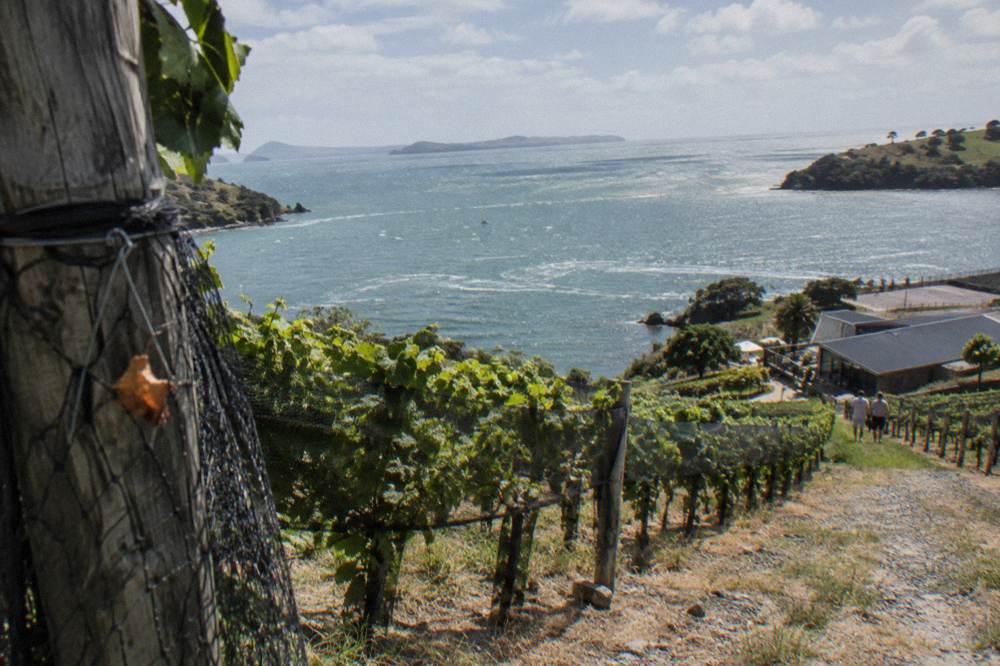
The same patience pays off across the whole day. Reviews of guided island tours again and again mention the view, the lunch, the guide's stories, as much as the wine. A day paced at intervals leaves room for those things. A day sprinted door to door leaves room for nothing but the next pour, and the next pour after that.
Common Questions About The 20 Minute Wine Rule
What Is The 20 Minute Wine Rule?
It is commonly cited tasting advice: give a wine roughly twenty minutes of air, and give yourself a similar pause between wines, before judging or moving on. It is a pacing habit, not a measured constant, and no island source defines it precisely.
Is the 20 minute wine rule scientifically proven?
No research pins down a precise twenty minute window behind this rule. Wine does change with exposure to oxygen, and palates do fatigue, but the timeframe varies by wine. Treat the number as shorthand for "slow down."
Do guided Waiheke tours build in waiting time between tastings?
Yes, by structure. The tours we feature spread three vineyard stops across roughly five or six hours, with travel time, commentary and lunch acting as natural pauses between flights, whether or not anyone invokes the rule.
How long does a wine tasting take at each vineyard?
Based on tour durations of about five to six hours for three stops plus travel and often lunch, a typical vineyard visit runs roughly sixty to ninety minutes, of which the tasting itself is only part. The blog post on how long a wine tour goes for breaks this down further.
Does the rule matter more for red wines?
Full-bodied reds, the styles Waiheke is known for, are the wines tasters most often describe as opening in the glass. The association reports 57 percent of the island's wine is red, led by Merlot and Syrah, so on this island the patience habit has plenty to work on.
Can I apply the rule if I am tasting without a tour?
Yes. Plan two to three cellar doors rather than five, anchor the middle of the day with a booked lunch, and let the ferry, bus or a coastal walk serve as the enforced pause between venues.